
Breakfast & Brunch
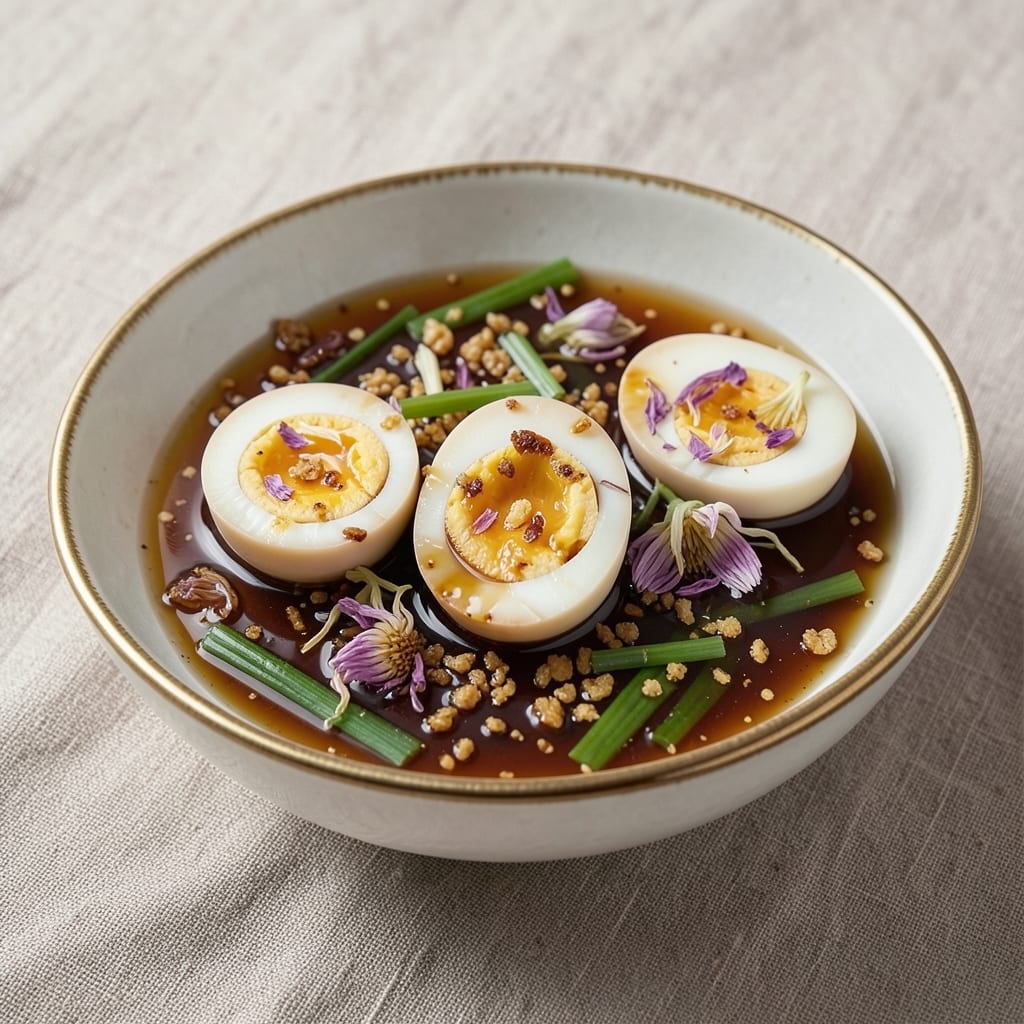
This Chinese herbal tea egg recipe transforms simple eggs into a luxurious breakfast experience with fragrant jasmine or chrysanthemum tea infusing every bite. The silky scrambled centers and aromatic broth create a dish that feels both comforting and sophisticated—ideal for weekend brunches or special occasions. I developed this recipe after discovering how tea elevates humble eggs into something truly special, with the right balance of herbal notes and tender texture.
The secret lies in steeping high-quality herbal tea directly in the cooking liquid, which gently flavors the eggs without overpowering their natural richness. You'll work with a simple broth base, eggs, and just a few pantry staples, but the result is anything but basic. The tea not only infuses flavor but also creates a delicate, fragrant aroma that lingers with every spoonful.
What you'll achieve is a dish where perfectly set eggs float in a fragrant, lightly seasoned broth, their centers remaining silky and tender. The tea's floral or earthy notes blend seamlessly with the eggs, creating a harmonious balance that's both comforting and refined. This recipe delivers restaurant-quality results with minimal effort, making it perfect for impressing guests or treating yourself to something extraordinary.
Serve with steamed rice or crusty bread to soak up every drop of that fragrant broth. The dish keeps well in the refrigerator for 2-3 days, allowing flavors to deepen over time. Whether you're preparing for a family gathering or simply craving a special breakfast, this herbal tea egg recipe delivers elegance and comfort in every bite.
Ingredients for chinese herbal tea egg
Fragrant tea-infused broth meets silky eggs for a luxurious breakfast experience.
| Ingredient | Amount | Notes |
|---|---|---|
| Large Eggs 🥚 | 8 whole | Fresh, room temperature |
| Jasmine Tea Bags 🍵 | 2 whole | High-quality loose leaf preferred |
| Chrysanthemum Tea Bags 🌼 | 2 whole | Alternative floral option |
| Chicken Broth 🍲 | 2 cups | Low-sodium, homemade preferred |
| Water 💧 | 1 cup | Filtered or spring water |
| Soy Sauce 🥢 | 1 tbsp | Light or regular, gluten-free if needed |
| Sesame Oil 🫒 | 1 tsp | Toasted, for aroma |
| Cornstarch 🌾 | 1 tsp | For silky texture |
| White Pepper 🌶️ | ¼ tsp | Freshly ground for subtle heat |
| Salt 🧂 | ½ tsp | Diamond Crystal preferred |
| Green Onions 🧅 | 3 whole | Thinly sliced, for garnish |
| Steamed Jasmine Rice 🍚 | 1 ½ cups | Cooked, for serving |
The tea is everything here. Loose-leaf jasmine or chrysanthemum from Adagio Teas or local specialty shops delivers the most authentic flavor—those little tea bags just can't compete. Look for vibrant, fragrant leaves, not dusty or faded ones. I always double-bag the tea in a fine mesh strainer to prevent tiny leaves from slipping into the broth. The broth itself should be low-sodium; if using store-bought, Kitchen Basics or Pacific Foods are my go-tos for clean flavor. Fresh eggs make all the difference—check the carton date and avoid those past their prime.
No jasmine tea? Green tea or oolong works in a pinch, but the floral notes won't be as pronounced. Store-bought broth too salty? Dilute with extra water or use vegetable broth instead. The cornstarch is non-negotiable for that signature silky texture—it's what keeps those egg centers perfectly set. Want more umami? Add 1 tsp fish sauce (vegetarian option: soy sauce + dash of mushroom powder). The green onions can be swapped for chives, but they add that fresh, bright finish that balances the tea's earthiness. Prefer your eggs extra tender? Reduce the cornstarch to 0.5 tsp.
This dish tastes even better the next day as the flavors meld. Store in an airtight container with a layer of plastic wrap pressed directly on the surface to prevent skin formation. Keeps for 2-3 days in the fridge—reheat gently over low heat, stirring occasionally. For make-ahead prep, cook the rice and broth separately, then assemble just before serving. The tea-infused broth freezes beautifully for up to 3 months if you want to prep components ahead of time. Garnish with extra green onions right before serving to keep them vibrant.
Why You'll Love This Recipe
- Tea-Steeped Simplicity: I swear, this takes less effort than boiling water for tea—just crack eggs into simmering broth with tea bags, and let the herbs work their magic. No chopping, no fuss, just hands-off magic while you sip your own cup of jasmine-chrysanthemum tea.
- Golden-Soft Perfection: That silky, jiggly yolk wrapped in a delicate tea-infused broth? It’s like a spa day for your taste buds—earthy chrysanthemum and floral jasmine turning plain eggs into something ridiculously good. The broth soaks up all the herbal notes, so every bite tastes like a warm hug.
- Weeknight & Meal Prep Hero: Make a big batch on Sunday—these eggs reheat in minutes, whether you’re throwing them into a quick stir-fry or serving them cold in rice bowls. Honestly, my lunchbox never looked this good before.
- Pocketbook-Friendly Luxury: Eggs, tea, broth—this is comfort food that won’t break the bank. The tea bags add depth without costing much, and you’ll stretch a pot of broth into multiple meals. My wallet and my taste buds thank me.
Step-by-step instructions for Chinese herbal tea eggs
Here's how to create silky scrambled eggs infused with delicate herbal notes and served over fragrant rice.
Prepare the Herbal Tea Broth
Bring the 2 cups chicken broth and 1 cup water to a gentle simmer in a medium saucepan over medium heat. Once simmering, remove from heat and add the 2 whole jasmine tea bags and 2 whole chrysanthemum tea bags. Let them steep for 5 minutes, then discard the tea bags using a slotted spoon. This infusion creates the aromatic base for your eggs.
Return the broth to a low simmer and add the 1 tablespoon soy sauce and 0.5 teaspoon salt. Taste the broth and adjust seasoning if needed—it should be lightly seasoned but not salty. Keep the broth warm over very low heat while you prepare the eggs. The herbal notes will develop further as the eggs cook in the broth.
Whisk Eggs with Cornstarch for Silky Texture
In a large bowl, crack the 8 whole large eggs and whisk them vigorously until the yolks and whites are completely combined. Add the 1 teaspoon cornstarch and 0.25 teaspoon white pepper, then whisk again until fully incorporated. The cornstarch creates that signature silky texture that sets this dish apart from regular scrambled eggs.
I like to whisk for about 30 seconds after adding the cornstarch to ensure it's evenly distributed. The eggs should look pale yellow and slightly thickened. If you notice any streaks of cornstarch, whisk for another 10 seconds to fully emulsify it. This step is crucial for achieving the perfect silky consistency.
Cook Eggs in Herbal Broth
Slowly pour the egg mixture into the simmering herbal broth while stirring gently with a heatproof spatula. The gentle heat will begin to set the eggs immediately. Continue cooking over very low heat for 3-4 minutes, stirring constantly in one direction to create those signature ribbons of silky egg.
Here's where it gets delicate: you want the eggs to be just set but still slightly runny in the center. They should look like thick, glossy ribbons rather than fully scrambled. If the mixture thickens too quickly, add 1-2 tablespoons of hot water from the broth to loosen it. The eggs should coat the back of a spoon but still feel slightly slippery.
Finish with Sesame Oil and Garnish
Once the eggs reach your desired consistency, remove the pan from heat and stir in the 1 teaspoon toasted sesame oil. This adds a nutty aroma that complements the herbal notes perfectly. The oil should be fully incorporated but still visible as tiny golden flecks throughout the eggs.
Divide the 1.5 cups steamed jasmine rice among four bowls. Ladle the herbal tea eggs over the rice, then garnish with thinly sliced green onions. Serve immediately while the eggs are still warm and the rice is steaming. The contrast between the silky eggs and fragrant rice creates a truly satisfying dish.
Pro Tips For Making Chinese Herbal Tea Egg
- Simmer Slow and Steady: After boiling the eggs, drop the heat to a bare simmer—think tiny bubbles, not rolling—so the tea infuses gently. I used to rush it, and the broth ended up bitter; patience gives you that delicate herbal aroma without overcooking the eggs.
- Tea Bags First, Always: Steep the jasmine and chrysanthemum tea bags in the broth before adding the eggs—this ensures the water’s already fragrant. I learned this the hard way when I tossed them in after boiling, and the flavor stayed weak. Let them sit for 3-4 minutes first.
- Crack Eggs Gently: Tap the eggs lightly on the counter before cracking to prevent shell fragments from splintering into the broth. I’ve fished out enough tiny shards to know this small step saves cleanup—and keeps the dish looking polished.
- Strain, Don’t Strain: Skip the straining if you want that cloudy, herbal richness in every bite—just remove the tea bags with tongs. I tried straining once for clarity, but the flavor lost its depth. The eggs soak up enough infusion without filtering.
Flavor customization for chinese herbal tea egg
Floral Tea Variations
Swap the jasmine and chrysanthemum for other fragrant teas like pu-erh for earthy depth or rose petal tea for floral sweetness. Use 2 tea bags of your chosen variety, steeping for 5 minutes in the broth. For a green tea twist, try sencha or matcha—add 1 tsp matcha powder directly to the broth for vibrant color and umami. 🌸
Spiced Broth Boosters
Add warmth with 1 star anise pod or ½ cinnamon stick to the simmering broth for a spiced chai-inspired flavor. Remove before serving. For a ginger kick, steep 1 tsp fresh grated ginger with the tea bags. Alternatively, stir in ½ tsp five-spice powder at the end for a Sichuan-inspired depth. Adjust to taste!
Protein Swaps
Replace eggs with silken tofu for a vegetarian version—whisk 1 block (14 oz) firm tofu with 1 tbsp cornstarch and 1 tsp sesame oil. Cook in the broth for 3-4 minutes until heated through. For extra richness, add 2 tbsp coconut milk to the broth. The texture will be creamier but still silky. 🥛
Umami Enhancers
Boost savory notes with 1 tbsp fish sauce (or soy sauce + ½ tsp mushroom powder for vegetarian). For a miso touch, dissolve 1 tsp white miso paste in the warm broth. A dash of black vinegar (just ½ tsp) adds tangy brightness. These tweaks elevate the dish without overpowering the tea’s delicate aroma.
Sweet-Savory Balance
Finish with 1 tsp honey or maple syrup drizzled over the eggs for a sweet-savory contrast. The floral tea pairs beautifully with subtle sweetness. For a spicy-sweet twist, add ¼ tsp chili oil alongside the sesame oil. Garnish with toasted sesame seeds or crushed peanuts for texture. 🍯
Nutrition facts
Frequently asked questions
Can I use loose-leaf tea instead of tea bags?
Loose-leaf tea actually infuses better for this recipe. Use 2 teaspoons of jasmine or chrysanthemum leaves per cup of broth, wrapped in a fine mesh tea ball or cheesecloth. Steep for 5 minutes to extract maximum flavor without bitterness. Just remove all tea leaves before adding the eggs to avoid any gritty texture.
Why do my eggs turn out too dry or grainy?
This usually happens when the heat is too high or the cornstarch isn't properly emulsified. Keep the broth at a gentle simmer (small bubbles) and stir constantly. For extra silkiness, whisk the eggs with the cornstarch for 45 seconds until completely smooth. If using older eggs, add 1 extra tablespoon water to the broth to compensate for their higher protein content.
How can I make this vegetarian?
Replace the eggs with 1 block (14 oz) firm tofu—crumbled or pressed to remove excess water. Whisk the tofu with 1 tablespoon cornstarch and 1 teaspoon sesame oil, then cook in the broth for 3-4 minutes. For extra richness, stir 2 tablespoons coconut milk into the broth. The texture will be creamier but still maintain that silky quality.
Can I prepare this ahead of time?
Yes! The broth and rice can be made 1 day ahead and stored separately. Cook the eggs fresh when ready to serve—they're best enjoyed warm. For make-ahead convenience, pre-steep the tea in the broth and refrigerate it in an airtight container. Reheat gently before adding the eggs. The flavors actually deepen overnight, making it taste even more fragrant!
What's the best tea ratio for maximum flavor?
For the most aromatic results, use a 1:1 ratio of tea to broth—2 tea bags per 1 cup of liquid. If using loose leaf, 2 teaspoons per cup works perfectly. For stronger herbal notes, steep for 6-7 minutes instead of 5, but don't exceed this time or the tea may become bitter. The key is balancing flavor without overpowering the eggs' natural taste.