
Breakfast & Brunch
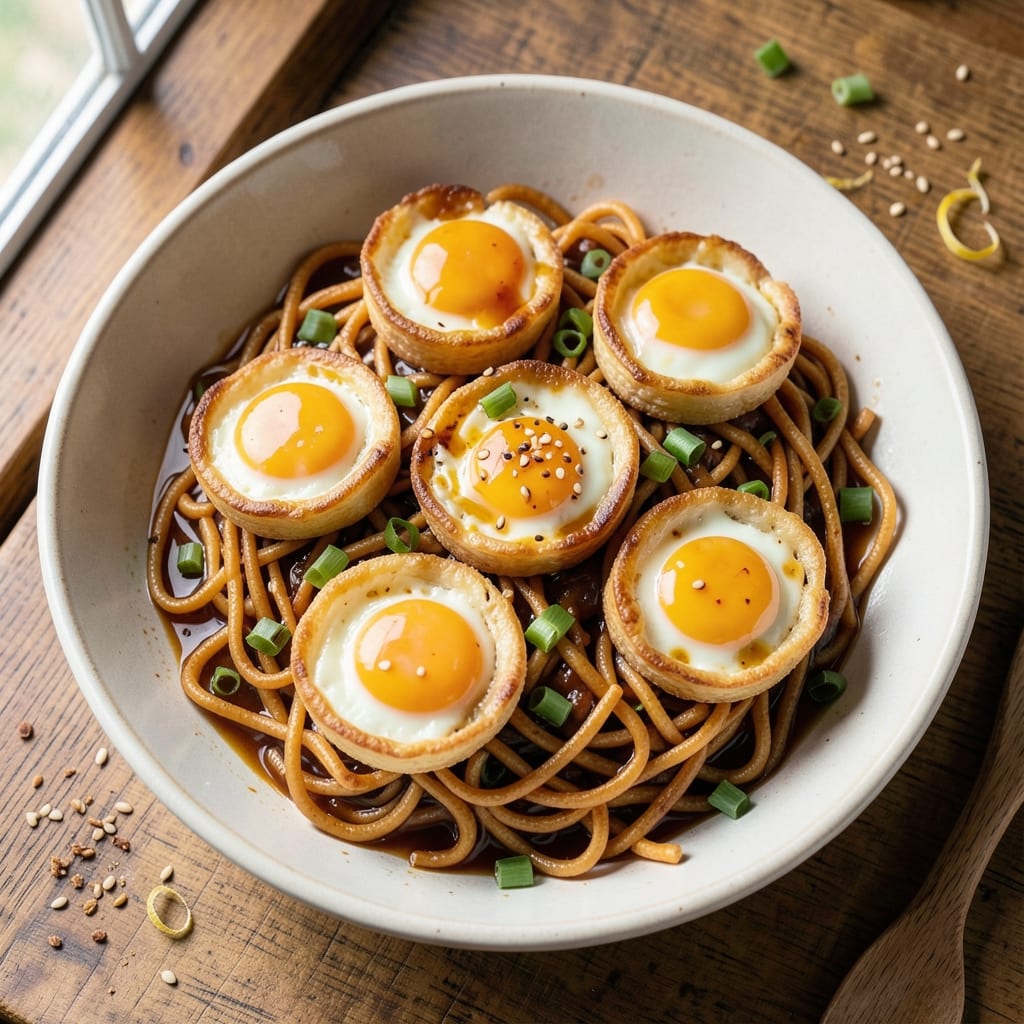
This chow mein noodle egg nests recipe transforms humble ingredients into a crispy, restaurant-worthy breakfast that delivers golden yolk rivers and chewy noodle pockets. The secret lies in perfectly pan-frying wonton cups until they achieve that signature shatteringly crisp exterior while keeping the centers tender and eggy. I developed this version after years of experimenting with textures—balancing the crunch of the wonton shells with the silky, custardy egg filling is what makes this dish truly special.
The process starts with preparing the wonton cups, which act as edible bowls for your noodle-egg mixture. Using store-bought or homemade wonton wrappers, you'll create those iconic nests by pressing them into a pan with just the right amount of oil—too much and they'll be greasy, too little and they won't crisp properly. The key is working quickly and maintaining consistent heat to ensure every cup achieves that crispy perfection. Once the nests are golden and crunchy, it's time for the star of the show: the noodle-egg filling.
What makes this recipe stand out is how the flavors come together—savory chow mein noodles mixed with a rich egg custard, all nestled within those crispy wonton cups. The sauce, a simple blend of soy, oyster, and a touch of sesame oil, ties everything together with its umami depth. When you cut into one of these nests, you'll see rivers of golden yolk oozing out, creating that satisfying, messy-eating experience that makes this dish so addictive.
Perfect for brunch gatherings or a weekend treat, this recipe serves 4 and comes together in about 30 minutes of active prep time. The best part? Leftovers reheat beautifully—just pop them in the oven until the edges are crispy again. This isn't just another egg dish; it's a foolproof technique that delivers restaurant-quality results at home, every single time.
Ingredients for chow mein noodle egg nests
Fourteen ingredients transform into crispy wonton nests with golden yolk rivers—restaurant quality at home.
| Ingredient | Amount | Notes |
|---|---|---|
| Wonton Wrappers 🥟 | 16 pieces | Square, store-bought or homemade |
| Large Eggs 🥚 | 4 whole | Room temperature for even cooking |
| Chow Mein Noodles 🍜 | 6 oz | Dried, uncooked, broken into 2-inch pieces |
| Vegetable Oil 🫒 | ½ cup | High smoke point for frying |
| Soy Sauce 🍶 | 1 ½ tbsp | Light or dark, preferably low-sodium |
| Oyster Sauce 🍶 | 1 tbsp | High-quality for authentic flavor |
| Sesame Oil 🫒 | ½ tbsp | Toasted for nutty aroma |
| Green Onions 🧅 | 3 whole | Thinly sliced, white and green parts |
| Garlic Cloves 🧄 | 2 cloves | Minced, for sauce depth |
| Salt 🧂 | ½ tsp | Kosher or sea salt |
| Black Pepper 🌶️ | ¼ tsp | Freshly ground for heat |
| White Pepper 🌶️ | ¼ tsp | For subtle earthy flavor |
| Cornstarch 🌾 | 1 tbsp | For crispy egg mixture |
| Water 💧 | ¼ cup | Room temperature |
Wonton wrappers are the foundation here. Koyo or Nissin brands are my go-to for consistent results, but any square wonton wrapper works. If you're making them from scratch, use a 1:2 ratio of flour to water and rest the dough for 30 minutes for best texture. The oil is non-negotiable—vegetable or canola with a high smoke point ensures crispiness without burning. I keep a bottle of Karo corn syrup in my pantry too—just a teaspoon mixed into the egg custard makes the yolk even more luxurious (trust me on this).
No oyster sauce? Hoisin sauce or extra soy sauce works in a pinch, though the umami depth will be slightly different. Fresh garlic and green onions can be swapped for 1 tsp garlic powder and 1 tbsp dried green onion flakes, but the texture won't be as vibrant. The cornstarch is crucial for that signature crispy exterior—don't skip it. For the noodles, if you can't find chow mein noodles, egg noodles or ramen noodles (discard seasoning) work well. The key is breaking them into 2-inch pieces before cooking so they cook evenly in the egg mixture.
Wonton wrappers keep best in the freezer for up to 6 months—just thaw completely before using. The egg mixture can be prepped ahead and stored in the fridge for 24 hours, but add a splash of water when reheating to maintain texture. For leftovers, reheat in a 350°F oven for 8-10 minutes until the edges are crispy again. These reheat beautifully—honestly taste better the second day once the flavors meld.
Why You'll Love This Recipe
- Pantry-to-Table Speed: I swear, this is the kind of dish you can start before your tea kettle boils. Fry the wonton wrappers in oil until they’re golden—no fancy shaping, just crumbled—and toss them with chow mein noodles straight from the package. The eggs cook in the same pan while you stir, so by the time you crack the last one, dinner’s ready.
- Umami Bomb Combo: That crispy wonton crunch meets the soft, custardy eggs? It’s like a flavor hug. The soy sauce ties it all together—salty, savory, and just enough to make your taste buds do a happy dance. Honestly, I’ve never met a dish that packs this much punch with so few ingredients.
- Lunchbox Legend: Between us, this is my go-to for school lunches or office meals. The nests hold up perfectly in containers, and the noodles stay chewy—not mushy. Add a side of pickled veggies or a quick cucumber salad, and you’ve got a meal that’s actually exciting to unpack. (Yes, even on a Tuesday.)
- Budget Magic: I made this twice last month and spent less than $10 total. Wonton wrappers are cheap, eggs are cheap, and chow mein noodles? Even cheaper. It’s the kind of recipe where every bite feels like a win—your wallet and your taste buds. Plus, leftovers reheat like a dream.
Step-by-step instructions for chow mein noodle egg nests
Perfectly crispy wonton cups filled with golden yolk rivers and savory noodles await.
Prepare the Egg-Noodle Filling
Break the 6 oz chow mein noodles into 2-inch pieces by hand, separating strands gently. In a bowl, whisk together the 4 whole large eggs, 1 tbsp cornstarch, 0.5 tsp salt, 0.25 tsp black pepper, 0.25 tsp white pepper, 1.5 tbsp soy sauce, and 1 tbsp oyster sauce until completely smooth. The cornstarch helps create a crispy texture when cooked.
Add the broken noodles to the egg mixture and toss until every strand is fully coated. Let the mixture sit for 5 minutes at room temperature—this allows the noodles to absorb the egg mixture evenly. The batter should be thick but pourable, like heavy pancake batter.
Assemble and Fry the Wonton Cups
Heat 0.5 cup vegetable oil in a 12-inch skillet over medium-high heat until shimmering but not smoking. Working in batches, carefully place 4 wonton wrappers into the skillet, pressing them gently to form 1-inch deep cups. Fry for 1-2 minutes until the edges turn golden brown and crispy.
Using a slotted spoon, remove the crispy wonton cups and drain on a wire rack or paper towels. Keep the oil hot for the next batch. The cups should be sturdy enough to hold the egg mixture without collapsing—this is your crispy foundation.
Fill and Cook the Egg Nests
Return the skillet to medium heat and add 0.5 tbsp sesame oil. Pour the egg-noodle mixture into the crispy wonton cups, filling them ¾ full. Cook for 2-3 minutes until the bottoms turn golden and the edges set slightly. The filling should be just set but still slightly runny inside.
Carefully flip each nest using a spatula, pressing gently to ensure the filling doesn’t spill. Cook for another 1-2 minutes until the bottoms are crispy and the filling is fully cooked through. The nests should hold their shape when lifted.
Garnish and Serve Immediately
Transfer the egg nests to a serving platter. Thinly slice the 3 whole green onions and scatter them over the top. Minced 2 cloves garlic can also be sprinkled for extra aroma, though it’s optional. Serve immediately while the wonton cups are still crispy and the egg centers are molten.
The key to success is timing—these nests are best enjoyed fresh. Each bite should deliver a satisfying crunch from the wonton cups, followed by creamy egg and tender noodles. The crispy exterior contrasts beautifully with the silky filling, making every mouthful a textural delight.
Pro Tips For Making Chow Mein Noodle Egg Nests
- Prep Eggs at Room Temp: Crack those eggs into a bowl first and let them sit for 10 minutes before cooking. Cold eggs from the fridge tighten up when they hit the oil, making them harder to flip and less likely to form those crispy nests you want—especially when working with wonton wrappers.
- Use a Wonton Wrapper Mold: Skip the freehand circle-cutting—press wonton wrappers into a round mold (or a glass) before adding egg. This guarantees uniform nests every time, and the edges crisp faster. I tried this after burning three batches of uneven nests, and it’s a game-changer.
- Cook Noodles Al Dente: Pull the chow mein noodles out of the pot when they’re just tender—about 2 minutes before package instructions say. Overcooked noodles turn mushy when they hit the hot oil, and you’ll end up with a soggy mess instead of chewy bites. Rinse them in cold water right after draining to stop the cooking.
- Double-Fry the Nests: First fry the egg nests until the edges lift (about 2 minutes), then flip and cook another 30 seconds. This ensures the centers set without the wrappers getting greasy. After draining, toss them in a wire basket to crisp up for 10 seconds—this step makes all the difference for texture.
Pro cooking tips for this dish
Oil Temperature Secrets
Getting the oil temperature right is everything for crispy wonton cups. Heat your 0.5 cup vegetable oil to 350°F—too hot and the wrappers burn before crisping, too cool and they turn soggy. I use a thermometer (like the Thermoworks One) to monitor, but if you don’t have one, test with a wonton wrapper: it should sizzle immediately and turn golden in 30 seconds. Never reuse oil for multiple batches—fresh oil ensures consistent crispiness every time. 🌡️
Egg Mixture Consistency
The perfect egg-noodle batter should be thick like pancake batter but still pourable. If it’s too thin, add 1 more tbsp cornstarch; if too thick, whisk in 1 tbsp water. The cornstarch is non-negotiable—it creates that signature crispy exterior when cooked. Let the mixture rest for 5 minutes after combining; this lets the noodles absorb flavor evenly. I’ve ruined batches by skipping this step—don’t make my mistake! 🥚
Frying in Batches
Work in batches of 4 wonton cups at a time to avoid overcrowding, which steams instead of crisps. Use a slotted spoon to remove them—never a regular spoon, or you’ll trap oil and lose crispiness. Keep the cups on a wire rack (not paper towels) to maintain crunch. If the oil smokes excessively, reduce heat slightly; smoking means the wrappers will burn before browning. Patience here pays off—rushed frying leads to soggy bottoms. 🔥
Flipping Technique
Flipping is where most home cooks mess up. Wait until the egg filling is just set (about 2 minutes in), then use a wide spatula to press the nest gently—this prevents spills. Flip only once, and cook another 1-2 minutes until the bottom is golden. If the filling spills, it’s overfilled; next time, use ¾ full cups. A sturdy 12-inch skillet gives you the space to maneuver without crowding. 💫
Sauce Timing Trick
Add the 0.5 tbsp sesame oil to the skillet after removing the wonton cups—this prevents burning and adds aroma. For extra depth, mix 1 tsp Karo corn syrup into the egg batter before cooking; it makes the yolk even richer. If your sauce seems too thin, reduce it on medium heat for 2 minutes to thicken slightly. The sauce should coat the back of a spoon but remain pourable. 🍶
Reheating Leftovers
These nests reheat best in a 350°F oven for 8-10 minutes until the edges are crispy again. Avoid microwaving—they’ll turn rubbery. For extra crunch, broil for 1-2 minutes at the end. I like to reheat them on a baking sheet lined with parchment paper for easy cleanup. The texture won’t be exactly fresh, but they’re still delicious. Honestly, they’re even better the next day once the flavors meld! ❄️
Nutrition facts
Frequently asked questions
Can I use regular wonton wrappers or do I need square ones?
Square wonton wrappers are ideal for this recipe because they create those classic egg nest shapes. However, if you only have round wrappers, you can still make nests by folding them into 1-inch deep cups before frying. The texture will be slightly different but still delicious!
Why did my egg nests turn out soggy instead of crispy?
Soggy nests usually happen from one of three issues: overcrowding the pan, not enough oil, or flipping too soon. Work in batches of 4 nests at a time, use 0.5 cup fresh oil per batch, and wait until the egg filling is just set before flipping (2-3 minutes). A wire rack keeps them crispy longer than paper towels.
Can I make these egg nests ahead of time?
Assemble the nests and let them cool completely, then store in an airtight container in the fridge for 24 hours. Reheat in a 350°F oven for 8-10 minutes until crispy again. For best texture, serve fresh, but reheated nests still taste amazing with that familiar crunch.
What's the secret to getting golden yolk rivers?
The golden yolk rivers come from cooking the nests at the right temperature and filling them ¾ full. Use medium heat (not high) when cooking the egg mixture, and flip carefully to avoid spills. The cornstarch in the egg batter helps create that signature crispy exterior while keeping the center runny.
Can I add other ingredients like shrimp or veggies?
Yes! For extra flavor, stir in 2 oz cooked shrimp or ½ cup finely chopped mushrooms into the egg-noodle mixture. Keep the total filling volume to ¾ full per nest to maintain structure. Just be careful not to overfill when adding extras.