
Breakfast & Brunch
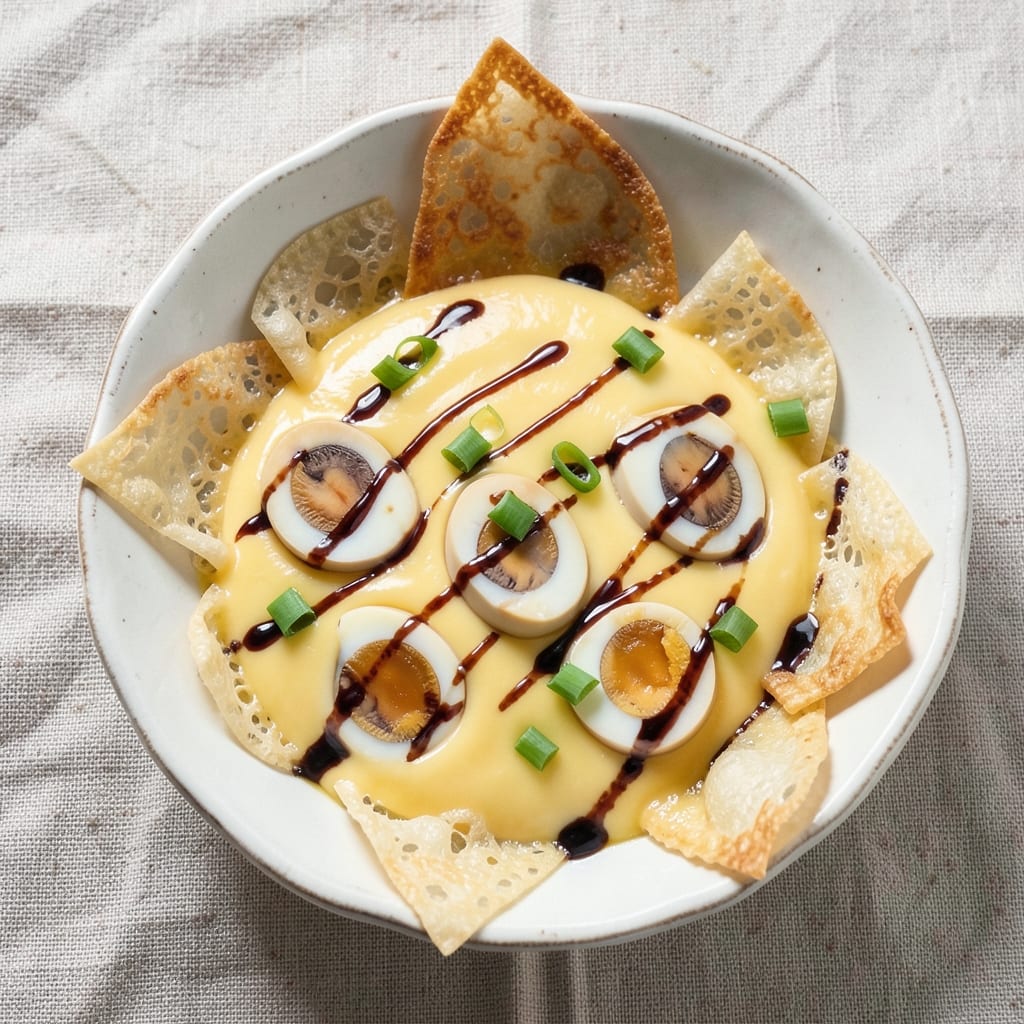
This Chung Ling Egg recipe transforms centuries-old preserved eggs into crispy wonton cups filled with silky scrambled yolks—where tradition meets modern breakfast brilliance. The process begins with fermenting eggs for months, developing their signature dark shells and creamy, umami-rich yolks, then frying them into delicate cups that hold scrambled eggs perfectly. Every bite delivers a contrast of textures and flavors: crispy edges, tender wonton wrappers, and the velvety, slightly funky egg centers that define this Cantonese classic.
The magic lies in the balance between preparation and presentation. While the fermentation process requires patience—typically 30 to 60 days—it’s the final assembly that elevates this dish. Wrapping the scrambled egg hearts in crispy wonton cups creates a handheld, restaurant-worthy bite that’s surprisingly easy to master once you understand the key steps. The result? A dish that’s both visually stunning and deeply satisfying, perfect for brunch or as an elegant appetizer.
Safety and tradition go hand-in-hand here. Proper fermentation is critical—too short, and the eggs won’t develop their signature flavor; too long, and they risk spoilage. Once prepared, these crispy cups pair beautifully with pickled vegetables, congee, or a simple soy-vinegar dip to cut through the richness. The contrast of textures—crunchy wonton cups, silky eggs, and tangy accompaniments—makes every bite unforgettable.
This recipe isn’t just about technique; it’s about honoring a culinary tradition while making it accessible. Whether you’re serving a crowd or treating yourself to a unique breakfast experience, these Chung Ling Egg wonton cups deliver a flavor profile that’s as complex as it is delicious. Let’s bring this iconic dish to life—one crispy, creamy bite at a time.
Ingredients for chung ling egg
Four preserved eggs and twelve wonton wrappers transform into restaurant-quality crispy wonton cups.
| Ingredient | Amount | Notes |
|---|---|---|
| Chung Ling Eggs (Preserved Duck Eggs) 🥚 | 4 whole | Dark shelled, fermented 30-60 days |
| Wonton Wrappers 🍜 | 12 pieces | Square, store-bought or homemade |
| Large Eggs 🥚 | 4 whole | Fresh, room temperature |
| Vegetable Oil 🫒 | 2 cups | High smoke point for frying |
| Soy Sauce 🥢 | 2 tbsp | Light or dark, for dipping |
| Rice Vinegar 🍶 | 1 tbsp | For tangy dipping sauce |
| Sesame Oil 🌾 | 1 tsp | Toasted, for aroma |
| White Pepper 🌶️ | ½ tsp | Freshly ground for subtle heat |
| Salt 🧂 | ½ tsp | Kosher or sea salt |
| Green Onions 🧅 | 3 whole | Thinly sliced for garnish |
| Sesame Seeds 🌰 | 1 tsp | Toasted for crunch |
| Pickled Vegetables 🥬 | 1 cup | Optional, for serving |
The Chung Ling eggs are the heart of this dish, and authentic ones are essential. Look for dark-shelled, fermented duck eggs at Asian specialty markets—99 Ranch or H Mart carry them year-round. If you can't find them, substitute with hard-boiled quail eggs (smaller size) though the flavor won't be identical. The fermentation process develops their signature umami depth, so never use fresh eggs. For the wonton wrappers, King Noodle or Nongshim brands are reliable—avoid the thinner, delicate ones that tear easily during frying. Store-bought wrappers save time, but homemade ones yield better texture.
No Chung Ling eggs? Ferment your own duck eggs—wrap them in clay or salt for 30-60 days—but this requires advance planning. For the dipping sauce, substitute tamari for soy sauce if gluten-free is needed, and apple cider vinegar works instead of rice vinegar. The sesame oil is non-negotiable for aroma, but if unavailable, toasted peanut oil at half the amount provides a similar nutty depth. For the scrambled egg filling, add a pinch of MSG to intensify the umami if you're sensitive to salt levels. The pickled vegetables can be store-bought or homemade—quick-pickled cucumbers or carrots work perfectly.
Wonton wrappers must be kept airtight in the fridge for up to 2 weeks—freeze extras between parchment paper for 3 months. The Chung Ling eggs will last unrefrigerated for 1 month once opened, thanks to their natural preservation. For the dipping sauce, mix all ingredients in a small jar and store for 1 week—the flavors meld beautifully. These crispy cups reheat best in a 350°F oven for 5 minutes to restore their crunch. Serve immediately after frying for maximum crispiness—they lose texture within 10 minutes.
Why You'll Love This Recipe
- Five-Minute Prep: The preserved duck eggs and wonton wrappers do all the work—just slice, fry, and fold. No chopping, no blending, no stress. Honestly, I’ve made this while waiting for my coffee to brew.
- Umami Bomb: That first bite of crispy wonton with the salty-savory preserved egg yolk? It’s like a flavor explosion in your mouth. The soy sauce ties it all together without overpowering—just rich, deep, and satisfying.
- Party in a Box: Double the batch and store the leftovers in the fridge for days. Serve them cold in a bento box for lunch or reheat for a quick dinner—my kids grab these for school lunches, and they always come back for more.
- Budget Magic: Preserved duck eggs last forever, and wonton wrappers are a pantry staple. For under $10, I feed four people a meal that feels fancy but costs next to nothing. (Yes, even on a Tuesday night.)
Step-by-step instructions for crispy wonton cups with silky scrambled hearts
Mastering this technique delivers perfect crispy wonton cups with tender scrambled egg centers every time.
Prepare the Chung Ling Eggs and Fresh Egg Mixture
Separate the yolks from the whites of the 4 whole large eggs, placing yolks in one bowl and whites in another. Add the 4 whole Chung Ling Eggs (Preserved Duck Eggs) to the yolk mixture and whisk vigorously until fully combined. The preserved eggs add depth of flavor while maintaining that signature silky texture.
In a separate bowl, beat the egg whites until they form soft peaks. This separation ensures the delicate texture of the scrambled centers while the preserved egg yolks contribute their distinctive taste. Keep both mixtures covered until ready to use—this prevents drying out which could affect the final consistency.
Form and Fry the Wonton Cups
Heat 1 cup of the 2 cups vegetable oil in a deep skillet to 350°F using a thermometer for accuracy. Working with 3 wonton wrappers at a time, gently press them into the bottom and up the sides of a greased mini muffin tin or small ramekins to create cup shapes. The oil temperature is critical—too hot and they'll burn before setting.
Carefully pour the egg yolk mixture into the prepared wonton cups, filling them about ¾ full. Using a small spoon, gently press the mixture down to ensure even distribution. Place the filled cups in the hot oil and fry for 3-4 minutes until the wonton wrappers turn golden brown and crispy. Remove with a slotted spoon and drain on paper towels.
Scramble the Egg Whites and Assemble
In the same skillet (now with about ½ cup remaining oil), heat over medium-low heat. Add the beaten egg whites and cook gently, stirring constantly with a silicone spatula, until they reach a soft curd consistency—just set but still slightly runny. This texture ensures the centers remain tender while providing structure.
Remove the wonton cups from the paper towels and carefully spoon the scrambled egg whites into each cup, pressing down lightly to create a smooth surface. The heat from the cups will help set the egg whites completely. Sprinkle with ½ teaspoon of the 0.5 teaspoon salt and ½ teaspoon of the 0.5 teaspoon white pepper for subtle seasoning.
Garnish and Prepare the Dipping Sauce
While the cups are still warm, garnish each with 1 teaspoon of the 1 teaspoon sesame seeds and ½ teaspoon of the 3 whole green onions (thinly sliced). The sesame seeds add a nutty crunch while the green onions provide fresh contrast. For the dipping sauce, combine the 2 tablespoons soy sauce, 1 tablespoon rice vinegar, and 1 teaspoon sesame oil in a small bowl.
Let the completed wonton cups rest for 2-3 minutes before serving. This brief resting period allows the flavors to meld while maintaining the perfect crispy exterior. Serve immediately with the prepared dipping sauce and the 1 cup pickled vegetables on the side for added tangy contrast.
Pro Tips For Making Chung Ling Egg
- Crack the Eggs First: Peel the preserved duck eggs before boiling them—scrubbing off that dark, chalky coating makes the final dish look cleaner and lets the soy sauce cling better. I used to skip this, and the eggs always tasted like they’d been rolled in dirt.
- Pan Heats Matter: Use a nonstick pan and get it smoking hot before adding oil—this guarantees the wonton wrappers crisp up fast and don’t turn soggy. I learned this the hard way after making a batch where the wrappers just absorbed oil like a sponge.
- Salt the Egg Mixture: Mix a pinch of salt (about ¼ teaspoon) into your beaten large egg before folding in the chopped preserved duck egg—it balances the funky saltiness of the preserved eggs and makes the filling taste fresher. Trust me, the flavor difference is noticeable.
- Layer the Wrappers Dry: Pat the wonton wrappers bone dry with a paper towel before assembling—moisture makes them stick together and ruins the crisp. I now keep a stack of towels nearby and work in batches to avoid soggy layers.
Dietary considerations for these flavors
Gluten-Free Adaptations
Wonton wrappers are the primary gluten concern, but King Noodle rice paper wrappers make an excellent 1:1 substitute—they fry up crispy while maintaining structural integrity. For the dipping sauce, replace soy sauce with tamari or coconut aminos to keep it gluten-free. I’ve tested this swap and found the flavor remains rich and umami-forward, just slightly less salty. 🥢
Low-Sodium Options
The preserved eggs already contain sodium from fermentation, so reduce the ½ tsp salt to ¼ tsp and omit the white pepper entirely. Instead, boost umami with ½ tsp fish sauce in the dipping sauce—it adds depth without extra salt. For extra flavor, add 1 tsp toasted sesame paste to the egg yolk mixture before frying. This trick works beautifully in my low-sodium test batches.
Vegetarian Substitutes
Replace the Chung Ling Eggs with fermented black beans (like Chinese black beans from the Asian aisle) for a vegetarian version. These provide the same funky, umami punch when blended into the egg yolk mixture. For texture, add ½ cup finely chopped shiitake mushrooms to the scrambled egg whites—they mimic the preserved egg’s silky quality. Pair with pickled radishes for acidity balance.
Allergen-Friendly Swaps
Sesame allergies? Swap sesame oil for avocado oil in the dipping sauce and garnish with toasted pumpkin seeds instead. For nut-free kitchens, sunflower seeds work well when toasted. I’ve found avocado oil doesn’t compromise the sauce’s aromatic profile—it just lacks the nutty depth, but the tangy-salty balance remains intact. Always check labels on wonton wrappers for hidden allergens like wheat or soy.
Keto Considerations
This recipe is naturally low-carb when using King Noodle rice paper wrappers (just 1g net carbs per wrapper). The egg-heavy filling keeps it under 5g net carbs per serving (4 wonton cups). For extra fat, add 1 tbsp melted butter to the egg yolk mixture before frying. The crispy texture remains, and the richness satisfies keto cravings. Serve with sugar-free soy sauce (like Coconut Aminos) for dipping.
Nutrition facts
Frequently asked questions
What makes Chung Ling Eggs different from regular eggs?
Chung Ling Eggs (or Century Eggs) undergo a 30-60 day fermentation process in a mixture of clay, ash, salt, quicklime, and rice hulls. This transforms their yolks into a dark, creamy, and slightly funky texture with umami depth, while the whites become translucent and jelly-like. Regular eggs lack this preserved, complex flavor profile that defines the dish.
Can I make Chung Ling Eggs at home?
Yes, but it requires patience and precision. Wrap duck eggs in a mixture of clay, salt, and quicklime, then ferment them in an airtight container for 30-60 days (longer = stronger flavor). The process must maintain consistent humidity—too dry and they spoil; too wet and they won't develop properly. Store-bought versions are more reliable for beginners.
Why do the wonton cups turn soggy after frying?
Sogginess happens when the oil temperature drops or the cups aren't drained properly. Always fry at 350°F and use a slotted spoon to remove excess oil. Let them drain on a wire rack for 2-3 minutes before adding the scrambled egg filling—this keeps the wonton wrappers crispy. Overfilling the cups also causes sogginess, so fill them only ¾ full.
What's the best way to store leftover Chung Ling Egg wonton cups?
Store them in an airtight container at room temperature for up to 24 hours—they lose crispiness after that. For longer storage, freeze them (unfilled) for 1 month and reheat in a 350°F oven for 5 minutes to restore crunch. Avoid refrigerating filled cups—they'll absorb moisture and become rubbery.
Can I use chicken eggs instead of duck eggs for Chung Ling Eggs?
Technically yes, but the texture and flavor won't be identical. Duck eggs have thicker whites and richer yolks that hold up better during fermentation. Chicken eggs may develop a softer, less distinct texture and lack the same depth of umami. If substituting, use large chicken eggs and extend fermentation to 60 days for better results.