
Breakfast & Brunch
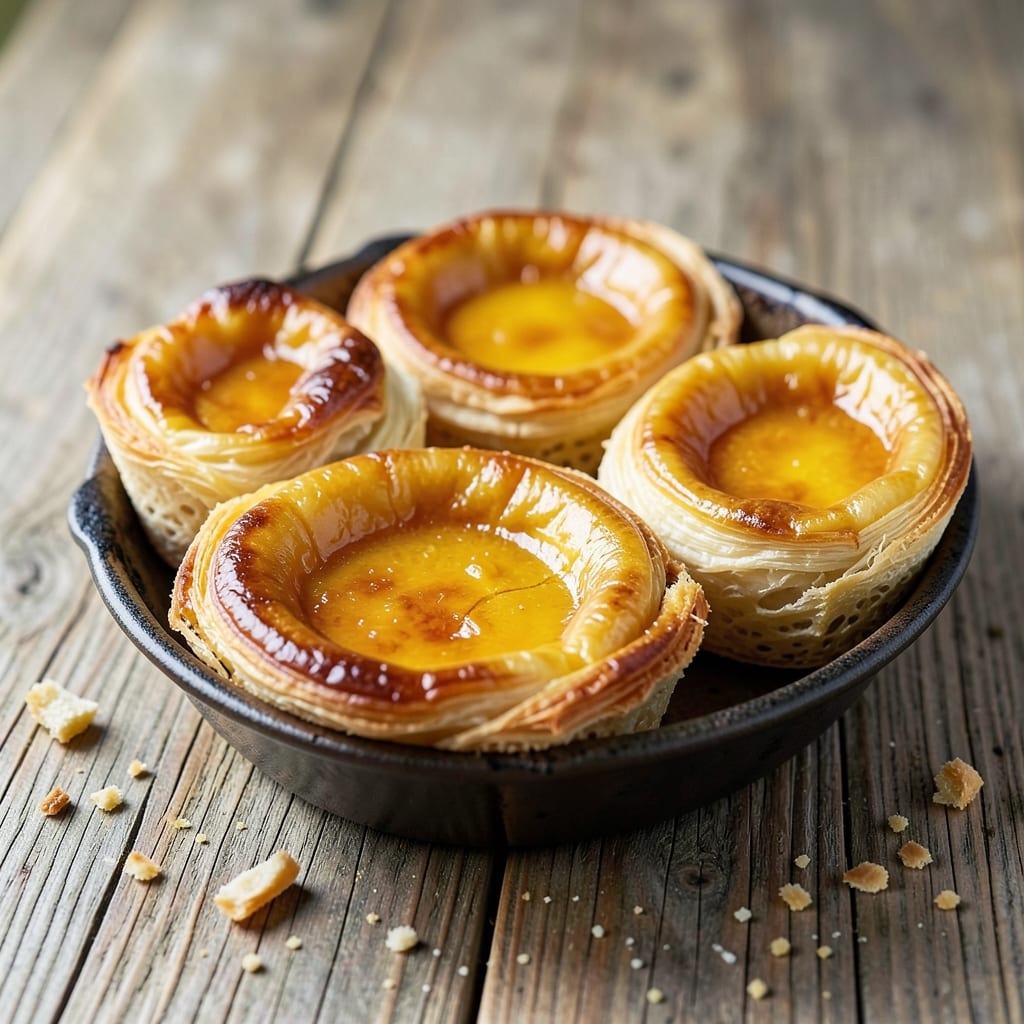
This classic egg tart recipe delivers the perfect balance of crisp golden crust and silky custard centers that melt in your mouth. 💛 The secret lies in a delicate shortcrust pastry that stays tender while baking, paired with a rich egg custard that transforms into a velvety heart when done right. I've perfected this Hong Kong-style treat through years of testing, ensuring each bite captures that iconic contrast between crisp edges and creamy filling.
The foundation begins with a simple shortcrust dough that's rolled thin and pressed into tart shells, creating those signature fluted edges. While the crust bakes to a perfect golden brown, the egg custard mixture—just eggs, milk, sugar, and cornstarch—pours into the warm shells and steams into perfection. The high heat from the crust creates that coveted custard heart that's still runny in the center when sliced.
What you'll end up with is a stack of golden egg tarts with crisp, buttery crusts that shatter slightly when bitten, giving way to silky custard that's rich yet light. The contrast between the warm, custardy center and cool, crisp exterior makes every bite unforgettable. These tarts are versatile enough for breakfast, dessert, or even afternoon tea—just dust with powdered sugar or drizzle with syrup for that final touch.
Whether you're recreating a Hong Kong café experience at home or introducing this classic to family, this recipe delivers authentic results with simple techniques. The key is patience during baking and precise temperature control to achieve those signature custard hearts. Let's get started on creating your perfect batch!
Ingredients for classic egg tart
Six ingredients for golden crusts and velvety custard hearts that'll make you feel like you're in Hong Kong.
| Ingredient | Amount | Notes |
|---|---|---|
| All-Purpose Flour 🌾 | 2 cups | Sifted for light texture |
| Unsalted Butter 🧈 | 1 cup | Cold, cubed for pastry |
| Granulated Sugar 🍚 | ¼ cup | For crust sweetness |
| Large Eggs 🥚 | 2 whole | Room temperature for dough |
| Ice Water 💧 | ½ cup | For dough binding |
| Large Eggs 🥚 | 4 whole | Separate yolks for custard |
| Whole Milk 🥛 | 1 cup | Full-fat for richness |
| Granulated Sugar 🍚 | ½ cup | For custard sweetness |
| Cornstarch 🌾 | ¼ cup | For custard stability |
| Salt 🧂 | ½ tsp | Fine sea salt |
| Powdered Sugar 🍚 | ¼ cup | For final dusting |
The butter is everything here—European-style if you can find it, but Land O'Lakes unsalted works perfectly fine. Grab the coldest butter from the fridge and cube it before mixing with flour. King Arthur flour is my go-to for shortcrust, but any all-purpose will do. The key is handling the dough gently—overworking makes it tough. For the custard, organic eggs from pasture-raised hens add extra richness, but regular large eggs work beautifully too. Milk matters here—whole milk gives the best texture, but 2% works in a pinch.
No powdered sugar? Sifted granulated sugar works in a bind, though it won't be as fine. Running short on cornstarch? Arrowroot powder at the same amount keeps the custard silky. The custard mixture should be thick but pourable—if it's too stiff, add a splash more milk. For that signature fluted edge, use a fork to crimp the dough or press with your thumb. And trust me, room-temperature eggs mix better than cold ones—take them out 30 minutes before using.
Shortcrust dough keeps 2 days wrapped in plastic in the fridge, or 3 months frozen. The custard mixture can be prepped ahead and refrigerated for 24 hours before baking. Once baked, egg tarts stay fresh 3 days at room temperature in an airtight container. For that café feel, serve warm with a drizzle of honey or condensed milk. Freeze unbaked tarts for 2 months—bake straight from frozen, adding 5 extra minutes.
Why You'll Love This Recipe
- I’ll be real: these disappear faster than I can bake them. Perfect for a mid-morning pick-me-up, a quick lunch, or even a dessert when you’re craving something sweet but not heavy. (Yes, even on a Tuesday night.)
- Foolproof Dough: Honestly, the pastry here is ridiculously forgiving. You’re mixing flour, cold butter, sugar, and ice water—no fancy techniques, just a quick rub until it clumps. Even if your hands get a little warm, the ice water keeps it from turning into a greasy mess.
- Golden Crust, Creamy Core: That crispy, buttery edge with the custardy egg center? Chef’s kiss. The sugar in the dough caramelizes just enough to give it a subtle sweetness, while the eggs stay rich and silky—no weird textures, just pure, addictive contrast.
- Breakfast or Snack: I’ll be real: these disappear faster than I can bake them. Perfect for a mid-morning pick-me-up, a quick lunch, or even a dessert when you’re craving something sweet but not heavy. (Yes, even on a Tuesday night.)
Step-by-step instructions for classic egg tarts
Here's how to nail that perfect balance of flaky crust and velvety custard—every time!
👨🍳 Step 1: Make the Golden Crust Dough
In a large mixing bowl, combine the 2 cups All-Purpose Flour and 0.25 cup Granulated Sugar. Cut in the 1 cup Unsalted Butter (cold and cubed) using a pastry cutter or your fingers until the mixture resembles coarse crumbs with pea-sized butter pieces. This texture is crucial—it creates flaky layers when baked.
Add the 2 whole Large Eggs (room temperature) and mix gently until just combined. Then gradually add the 0.5 cup Ice Water, 1 tablespoon at a time, mixing lightly with a fork until the dough comes together. Avoid overmixing—just until it holds when pressed. Shape into a disk, wrap in plastic, and chill for 30 minutes. This resting period firms up the gluten for easier rolling.
🍳 Step 2: Roll and Fill the Tart Shells
Preheat your oven to 375°F. Roll out the chilled dough on a lightly floured surface to about 1/8-inch thickness. Cut into circles using a 3-inch round cutter (or bottoms of small glasses) and press gently into 6 greased mini tart pans. Prick the bottoms with a fork to prevent puffing.
For the custard filling, whisk together the 4 whole Large Eggs, 1 cup Whole Milk, 0.5 cup Granulated Sugar, 0.25 cup Cornstarch, and 0.5 tsp Salt until smooth. Pour the custard into the tart shells, filling them 3/4 full. Here's the thing—don't overfill or the custard will spill during baking.
🔥 Step 3: Bake to Perfection
Bake the tarts for 15-18 minutes until the crust is golden brown and the edges are set. The custard should still appear slightly underdone in the center—this is normal! Remove from the oven and let them cool completely at room temperature. This resting period allows the custard to set properly without breaking.
I know it's tempting to dig in right away, but patience here ensures that silky yolk heart we all love. If the tops brown too quickly, tent the tarts loosely with foil after 10 minutes to protect them while the centers finish baking.
🥘 Step 4: Dust and Serve
Once completely cooled, dust the tops generously with 0.25 cup Powdered Sugar using a fine-mesh sieve. This step gives those classic egg tarts their signature snowy appearance. Serve at room temperature for the best texture—the custard should be creamy with a slight wobble in the center, while the crust remains crisp and flaky.
Here's where it gets fun—each tart should have that perfect contrast of textures: crisp golden crust giving way to velvety custard. The powdered sugar adds just the right touch of sweetness to balance the rich egg flavor. Enjoy them fresh or store in an airtight container for up to 3 days—though they rarely last that long!
Pro Tips For Making Classic Egg Tart
- CHILL THE DOUGH: I learned this the hard way—rolling out warm puff pastry dough for the tart shells makes it stick and tear. Press it between two sheets of parchment, then pop it in the fridge for 20 minutes before cutting. This isn’t just about ease; it guarantees clean edges that hold their shape when baking.
- USE COLD BUTTER: Skip the softened butter in the filling—cold cubes of unsalted butter folded into the egg-sugar mix create pockets of flaky texture when baked. Pulse them briefly in a food processor first to break them down slightly, but leave them pea-sized. This is the thing that matters most for that signature melt-in-your-mouth contrast.
- BAKE IN STAGES: Don’t rush the tart shells to a deep golden color. Bake them at 375°F (190°C) for 12–15 minutes until just set, then reduce heat to 325°F (160°C) for the final 5–8 minutes. This prevents the bottoms from burning while the tops crisp. I was skeptical until I tried it—now I never skip it.
- WHISK EGGS FAST: Beat the eggs for the custard until they’re just combined—no need to overmix. A few streaks of white are fine; overworking them makes the filling gummy. Pour the mixture into the pre-baked shells immediately, then bake without delay. This isn’t the prettiest method, but it’s the tastiest, and it saves you from waiting for the eggs to cool.
Storing and reheating this dish
Room-Temp Storage
Egg tarts stay fresh at room temperature for up to 3 days when stored in an airtight container lined with parchment paper. I like using glass containers with snap lids—they keep the tarts from drying out. Place them in a single layer to maintain their shape, and avoid stacking to prevent crushing the delicate crusts. The custard remains creamy when stored properly, though the texture may firm up slightly. 💛
Refrigerator Refresh
If you've stored them in the fridge (up to 5 days), reheating is simple. Preheat your oven to 350°F and warm the tarts for 5-7 minutes until the custard is just heated through. For a quicker method, microwave individual tarts on 50% power for 15-20 seconds—just enough to soften the custard without drying the crust. Always check for doneness by testing the custard temperature at 165°F.
Freezer Prep
Unbaked egg tarts freeze beautifully for up to 2 months. Wrap each tart individually in plastic wrap, then place them in a freezer-safe bag with all the air squeezed out. When ready to bake, remove them from the freezer and let them thaw in the fridge overnight. Bake straight from frozen, adding 5 extra minutes to the baking time to ensure the crust is fully golden and the custard is set.
Reviving Stale Tarts
If your egg tarts have lost their crispness, don't toss them! Place them in a preheated 350°F oven for 3-5 minutes to restore that perfect crunch. For extra moisture, brush the crust lightly with melted butter before reheating. This trick works wonders for both the texture and flavor—you'll barely notice they weren't fresh-baked. ✨
Portion Control
Egg tarts are best enjoyed fresh, but if you need to reheat individual portions, wrap them in a damp paper towel and microwave on low power for 8-10 seconds. This method keeps the custard creamy while warming the crust just enough to enjoy. For a crispy finish, transfer the reheated tart to a dry paper towel and let it sit for 1 minute before serving.
Storage Containers
For long-term storage, I recommend glass containers with airtight lids—they preserve the tarts' texture better than plastic. If you're short on containers, aluminum foil works in a pinch for short-term storage (up to 2 days). Just make sure the foil is tightly sealed to prevent moisture loss. For freezer storage, quart-sized freezer bags are my go-to—they're stackable and prevent freezer burn. 💡
Nutrition facts
Frequently asked questions
Why does my egg tart custard come out too firm?
Overbaking is the most common culprit! The custard should have a slight wobble in the center when done—this means it's still warm and creamy inside. Bake for 15-18 minutes at 375°F and remove when the crust is golden but the custard still looks underdone. If it sets too quickly, try reducing the oven temperature by 25°F next time.
Can I make egg tarts without a tart pan? Use 3-inch round cookie cutters or even the bottoms of small glasses to shape the crusts. For a rustic look, press the dough into greased muffin tins or shape free-form on a baking sheet. Just
What's the secret to a crispy crust?
Cold butter is key! Cut the butter into small cubes and keep it chilled until mixed with the flour. Also, roll the dough to an even 1/8-inch thickness and press it firmly into the pans. Bake on the middle rack for even heat distribution, and avoid opening the oven door during the first 10 minutes of baking.
How do I fix cracked custard?
Cracked custard usually means the tarts cooled too quickly. Let them cool completely at room temperature before dusting with powdered sugar. If cracks appear, try baking at 350°F instead of 375°F to slow the setting process. For a smoother finish, gently press a thin layer of custard mixture on top before baking.
Can I add flavor variations to the custard?
Yes! Try adding 1/2 teaspoon vanilla extract or 1/4 teaspoon cinnamon to the custard mixture for subtle flavor. For a tropical twist, fold in 1/4 cup crushed pineapple (drained) or 1 tablespoon coconut milk. Just be sure not to overfill the crusts, or the extra moisture may cause spillage during baking.