
Desserts
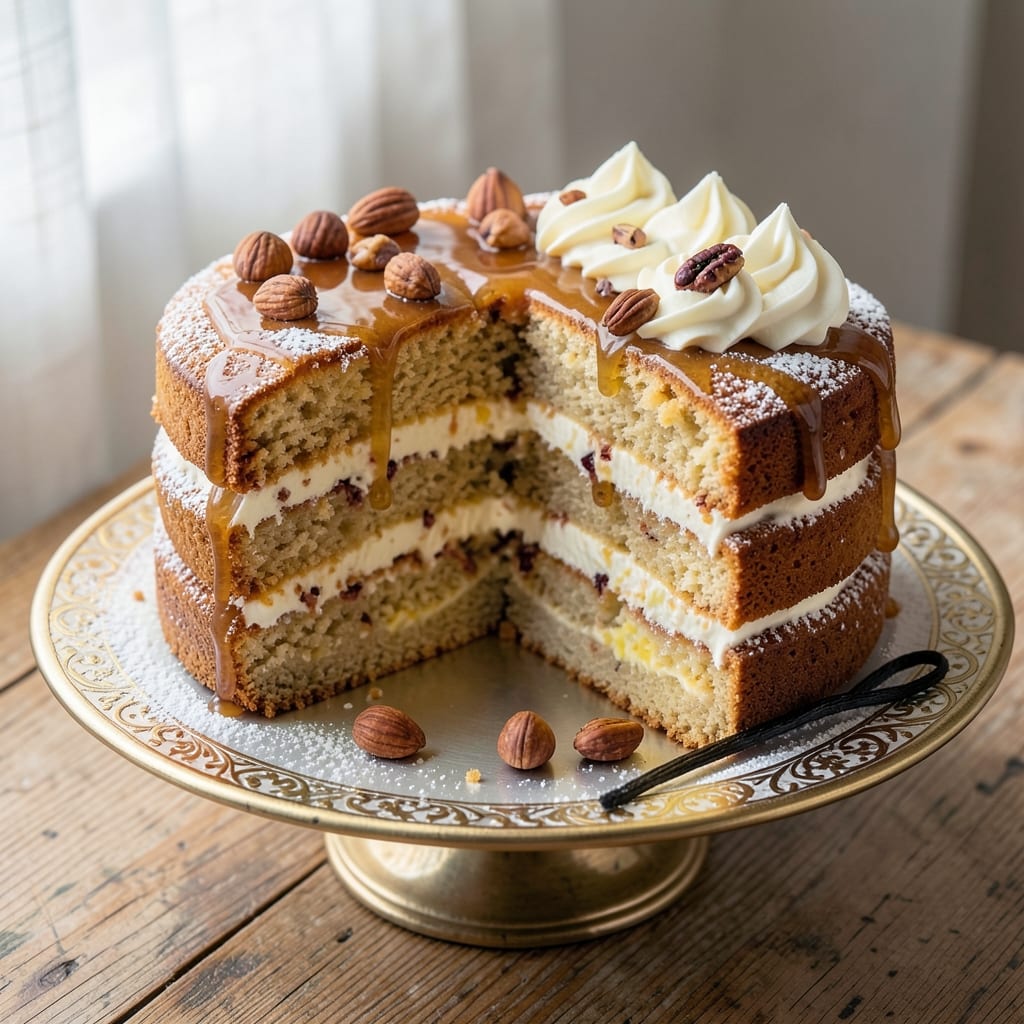
The secret to this duck egg cake lies in those golden yolks—each bite delivers rivers of rich, buttery flavor through fluffy vanilla layers. 🌟 Duck eggs, with their higher fat content and deeper color, transform ordinary cake into something luxurious, yet the technique remains surprisingly approachable for home bakers. The key is patience: letting the batter rest and baking at the right temperature ensures that signature moist crumb and tender crumb without drying out.
What makes this recipe special is how the duck eggs elevate simple ingredients into something extraordinary. Their natural richness reduces the need for extra butter or sugar, while the vibrant yolks create those coveted golden rivers when sliced. The vanilla layers stay light and airy, thanks to a precise folding technique that incorporates just enough air to create that perfect texture. This isn't just cake—it's an experience that turns dessert time into a moment of indulgence.
By the time you pull this cake from the oven, you'll have a masterpiece with a delicate golden crust and layers that slice cleanly, revealing those molten yolk pockets. The aroma alone—warm vanilla and caramelized egg—will have everyone gathered around. It's the kind of dessert that feels like a celebration, whether it's for a special occasion or simply because you deserve something extraordinary.
Best served slightly warm with a dusting of powdered sugar or a scoop of vanilla ice cream, this cake keeps well for up to three days when stored properly. The beauty of duck eggs is that they make even the simplest recipes shine, proving that sometimes, the best ingredients are the ones you might not have considered before. Let's get baking!
Ingredients for duck egg cake
Duck eggs, butter, and vanilla—simple ingredients that transform into a luxurious cake with golden yolk rivers.
| Ingredient | Amount | Notes |
|---|---|---|
| Duck Eggs 🥚 | 6 whole | Separate yolks and whites carefully |
| Unsalted Butter 🧈 | 1 cup | Softened to room temperature |
| Granulated Sugar 🍚 | 1 ½ cups | Superfine preferred for smooth texture |
| All-Purpose Flour 🌾 | 2 cups | Sifted for lightness |
| Pure Vanilla Extract 🌿 | 2 tsp | High-quality Madagascar preferred |
| Baking Powder 🧂 | 1 ½ tsp | Diamond Crystal preferred |
| Salt 🧂 | ½ tsp | Fine sea salt preferred |
| Vanilla Bean Paste 🌿 | 1 tbsp | For extra vanilla flavor |
| Heavy Cream 🥛 | 1 cup | Cold for folding |
| Powdered Sugar 🍚 | 1 cup | For dusting |
| Vanilla Ice Cream 🍦 | 2 cups | For serving (optional) |
| Lemon Zest 🍋 | 1 tsp | Brightens the flavor |
Duck eggs are the star here, so sourcing matters. Look for them at specialty grocers like Whole Foods or Trader Joe's—they're pricier but worth it for that rich, buttery flavor. If you can't find duck eggs, goose eggs work too, but chicken eggs will lack that signature depth. The butter should be European-style if possible—higher fat content means richer flavor. For vanilla, Madagascar bourbon vanilla has the most complex aroma, but any pure extract will do. The vanilla bean paste adds those little specks of vanilla that make the cake feel extra special.
No duck eggs? Use 8 large chicken eggs, but expect less richness. The butter can be swapped for vegetable shortening if you're avoiding dairy, though the texture won't be quite the same. For vanilla, imitation vanilla extract, but it lacks that depth. The vanilla ice cream is optional, but homemade vanilla bean ice cream takes this cake to the next level. If you're feeling fancy, add a pinch of cardamom to the batter for a sophisticated twist. And trust me, sifting the flour makes all the difference in that light, airy texture.
This cake keeps beautifully—3 days at room temperature wrapped tightly, or 1 week in the fridge if you want to play it safe. For serving, let it sit at room temp for 20-30 minutes—that's when those golden yolk rivers really shine. Store leftovers in an airtight container with a slice of bread to absorb moisture. The ice cream melts fast, so add it right before serving. Pro tip: Dust with powdered sugar right out of the oven while it's still warm—it'll melt into the crust and make it look like a bakery masterpiece.
Why You'll Love This Recipe
- Rich Without the Fuss: I swear by this cake because it delivers that buttery, golden richness of duck eggs—no fancy techniques, just creaming butter and sugar until it’s light as air. The yolks add this insane depth that makes every slice taste like a bakery secret.
- Vanilla Kiss, Always: That vanilla extract? It’s the star here. The duck eggs give it a velvety texture, but the vanilla makes it smell like a cozy kitchen before you even take a bite. Honestly, I’ve never had a vanilla cake this addictive without tasting artificial.
- Leftovers? Even Better: This cake holds up beautifully for days, which is huge when you’re feeding a crowd or just meandering through a lazy weekend. Slice it the next morning and it’s still moist—no sad, dry crumbs here.
- Budget Luxury: Duck eggs might sound fancy, but they’re cheaper than chicken eggs in many places, and the flavor upgrade is unreal. You’re basically getting gourmet cake for half the cost of store-bought. My wallet and taste buds thank me every time.
Step-by-step instructions for duck egg cake
Here's how to create a showstopping cake with golden layers and rivers of rich duck egg yolk.
👨🍳 Step 1: Separate Eggs and Whip Whites to Stiff Peaks
Crack the 6 whole duck eggs carefully between two bowls, separating yolks and whites completely. I use my fingers to guide each egg through the shell to avoid mixing. Transfer the whites to a clean, grease-free bowl—any fat will prevent them from whipping properly.
Add a pinch of the 0.5 tsp salt to the whites and whip with an electric mixer on high speed until soft peaks form. Gradually increase speed to stiff peaks—when you lift the whisk, the peaks should stand straight up and hold their shape. This takes about 5-7 minutes depending on your mixer. The whites should look glossy and hold their shape when you turn the bowl upside down.
👨🍳 Step 2: Cream Butter and Sugar for Light, Fluffy Texture
In a separate large bowl, beat the 1 cup softened unsalted butter and 1.5 cups granulated sugar together on medium speed for 3-4 minutes. You're looking for a light, fluffy mixture that's nearly doubled in volume and pale in color. This creaming process incorporates air, which creates the cake's signature tender crumb.
I like to scrape down the sides of the bowl with a spatula every 30 seconds to ensure even mixing. The butter should be completely smooth with no lumps, and the mixture should leave a ribbon trail when you lift the beaters—this indicates proper aeration. Stop mixing when the butter is light and fluffy but not greasy.
🍳 Step 3: Fold Dry Ingredients Gently for Maximum Lightness
In a medium bowl, sift together the 2 cups all-purpose flour, 1.5 tsp baking powder, 1 tbsp vanilla bean paste, and 1 tsp lemon zest. The sifting ensures no lumps remain and creates a light, airy texture. With the mixer on low speed, gradually add about ⅓ of the flour mixture to the butter-sugar mixture, mixing just until combined.
Then add the 2 tsp pure vanilla extract and remaining flour mixture in 3 additions, mixing on low speed just until the flour disappears. Be careful not to overmix—you should still see small streaks of flour when you lift the beaters. This gentle folding preserves the air incorporated in the butter-sugar mixture, which is crucial for the cake's light texture.
🥘 Step 4: Combine Yolks and Fold in Whipped Whites
In a separate bowl, whisk together the duck egg yolks and the 1.5 cups granulated sugar until the mixture is pale and slightly thickened. This takes about 2-3 minutes with a hand mixer. Then, add this yolk mixture to the butter-flour mixture in 3 additions, mixing on low speed just until combined after each addition.
Finally, gently fold in the whipped egg whites using a spatula, being careful not to deflate them. I do this in 3 additions, folding from the bottom up and making sure to scrape the sides of the bowl to incorporate all the whites. The batter should be thick but still pourable—if it's too stiff, the cake may be dense. The final batter should have a smooth, glossy appearance with no streaks.
⏰ Step 5: Bake in Layers for Perfect Texture
Divide the batter evenly between two 6-inch round cake pans lined with parchment paper. I use a kitchen scale for precision—each pan should have about 12 ounces of batter. Bake at 350°F for 20-25 minutes or until a toothpick inserted in the center comes out clean. The edges should be golden brown, and the top should spring back when gently pressed.
Let the cakes cool in the pans for 10 minutes, then transfer to a wire rack to cool completely. While they're cooling, whip the 1 cup heavy cream and 1 cup powdered sugar together until stiff peaks form. This will be used for filling between the layers. The cooled cakes should have a domed top with a moist, tender crumb—no cracks or dryness.
🍽️ Step 6: Assemble with Cream and Serve
Place one cake layer on a serving plate and spread a generous layer of the whipped cream mixture. Top with the second cake layer and spread more cream on top. I like to add a thin layer of the 2 cups vanilla ice cream between the layers for extra richness—it melts slightly and creates a luscious filling.
Dust the top and sides of the cake with the remaining powdered sugar using a fine-mesh sieve. Serve immediately with an extra scoop of vanilla ice cream on the side. The cake should have a tender, moist crumb with pockets of rich duck egg yolk that ooze out when sliced. Each bite should balance the fluffy vanilla cake with the creamy filling and bright lemon zest.
Pro Tips For Making Duck Egg Cake
- Whisk Eggs Until Ribbon Stage: Duck eggs are richer and thicker than chicken eggs, so don’t just give them a quick stir—whisk them vigorously until the ribbons hold for 2 seconds when you lift the whisk. I learned this after a cake collapsed mid-bake; the yolks weren’t fully emulsified.
- Cream Butter and Sugar Low: Beat the unsalted butter and sugar on medium-low heat for 3-5 minutes until pale and fluffy, not just combined. High speed = more air, but duck eggs need stable structure—this keeps the crumb tender without turning gummy.
- Sift Flour Over Eggs, Not Butter: Dump the sifted flour into the egg mixture, not the butter, to avoid killing the air you just worked so hard to create. My first attempt looked like pancake batter—flour over eggs saves the cake’s lightness.
- Bake at 325°F, Not 350°F: Duck eggs cook faster and drier than chicken eggs, so stick to 325°F and check for doneness at 25-30 minutes (toothpick test). I was skeptical until I tried it—350°F gives you a dense, dry cake every time.
Perfect pairings for this duck egg cake
Vanilla Cream Pairings
This cake shines with a classic vanilla bean ice cream—I recommend Häagen-Dazs Vanilla or homemade versions with scraped seeds for extra depth. The cold cream contrasts beautifully against the warm cake, creating those signature golden yolk rivers when sliced. For a lighter option, try coconut whipped cream sweetened with 1 tbsp honey—it adds a tropical brightness that cuts through the richness. 🥥
Citrus Zest Enhancements
Brighten each bite with orange or lemon zest on the side. I like to make a quick citrus glaze by mixing ½ cup powdered sugar with 2 tbsp fresh lemon juice and brushing it over the cake just before serving. The acidity balances the buttery duck eggs perfectly, while the zest adds a refreshing pop. For guests who love heat, add ½ tsp finely grated crystallized ginger to the glaze.
Warm Spiced Compote
Pair this cake with a warm spiced apple compote—simmer 2 cups diced apples, 1 cinnamon stick, 1 tbsp brown sugar, and ½ cup apple cider until thickened. The warm spices complement the vanilla while adding texture contrast. Another favorite is a raspberry coulis made by blending 1 cup raspberries with 2 tbsp sugar and straining—it adds a tart, fruity note that refreshes your palate. 🍏
Coffee or Tea Drizzle
For adult desserts, drizzle the cake with espresso syrup or a chai tea reduction. I make the latter by simmering 1 cup strong chai tea with 2 tbsp sugar until syrupy, then cooling before drizzling. The warm spices in the tea enhance the vanilla and duck egg richness without overpowering. For a simpler option, a dark chocolate ganache (melt ½ cup chocolate with ¼ cup heavy cream) adds decadence.
Crunchy Toppings
Add texture with toasted nuts or crunchy cookies. I like crushed amaretto cookies (toss ½ cup crushed cookies with 1 tbsp melted butter) for almond flavor, or toasted pecans for a Southern touch. For a salty contrast, sprinkle flaky sea salt over the cake before serving. These toppings elevate the cake from elegant to extraordinary with minimal effort. 🌰
Nutrition facts
Frequently asked questions
Why do duck eggs make this cake different from regular cake?
Duck eggs contain 30% more fat and 15% more protein than chicken eggs, giving this cake an ultra-rich, buttery flavor with those signature golden yolk rivers. The higher fat content also creates a more tender crumb that stays moist longer. Plus, the yolks' deeper color makes the cake look more luxurious!
Can I substitute duck eggs with chicken eggs?
Yes, but you'll lose some richness. Use 8 large chicken eggs instead of 6 duck eggs, and add 1 extra tablespoon of butter to compensate for the lower fat content. The texture will still be good, but the flavor won't be as decadent. For best results, stick with duck eggs if possible!
How do I prevent my cake from drying out?
Duck egg cakes stay moist when baked properly. First, don't overbake—pull it out when a toothpick comes out clean (20-25 minutes at 350°F). Second, let it cool completely before slicing. For storage, keep it in an airtight container with a slice of bread to absorb moisture. The cake will stay fresh for 3 days at room temperature.
What's the best way to serve this cake?
Serve it at room temperature for the best texture and those signature yolk rivers. A scoop of vanilla ice cream or a drizzle of warm spiced compote makes it extra special. For presentation, dust with powdered sugar right before serving—it melts slightly into the warm cake for a bakery-style finish.
Can I make this cake gluten-free?
Yes, but you'll need to substitute the all-purpose flour. Use a 1:1 gluten-free baking flour blend (like Bob's Red Mill) and add ½ tsp xanthan gum to improve texture. Also, let the batter rest for 15 minutes before baking to help the gluten-free flour absorb moisture. The cake will be slightly denser but still delicious!