
Breakfast & Brunch
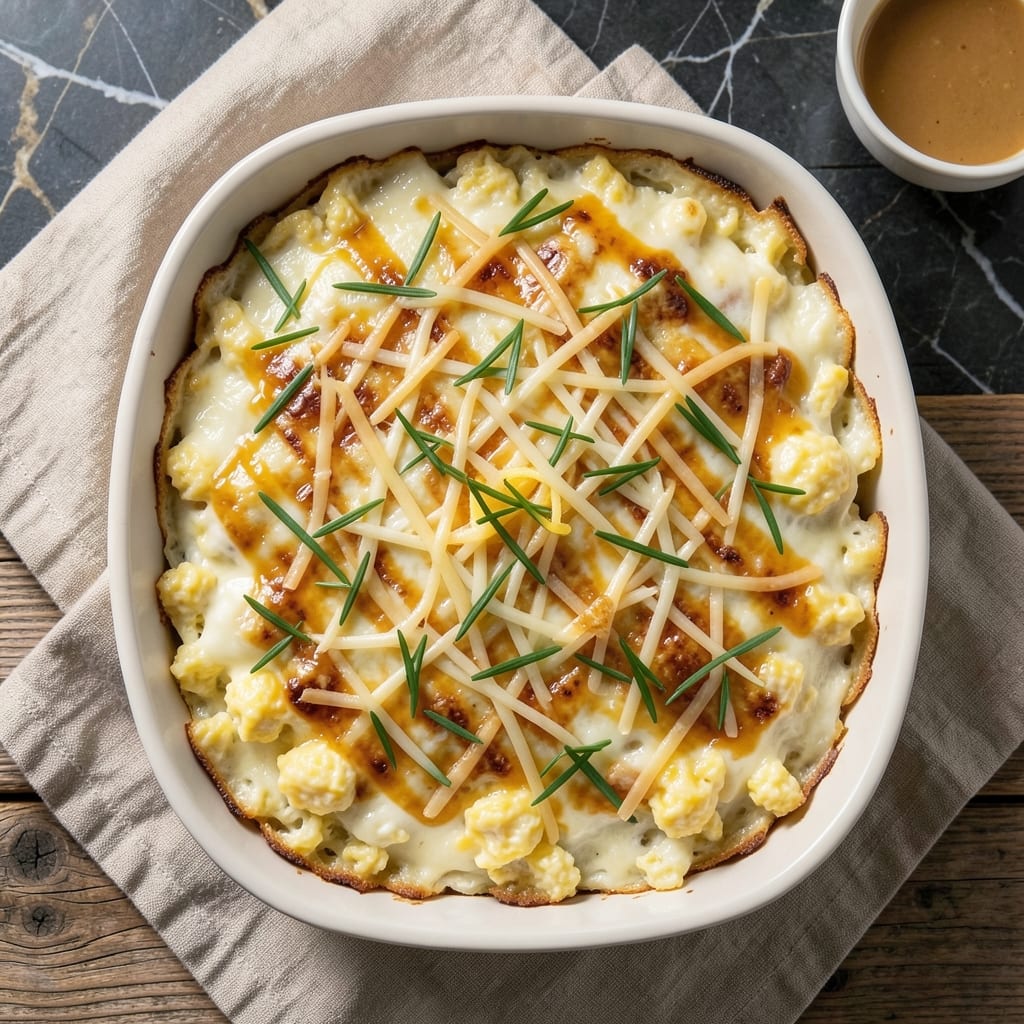
This Easter brunch egg casserole transforms humble ingredients into a showstopping centerpiece that’ll have your guests reaching for seconds. 🌸 The secret lies in herb-infused cheese rivers that melt into golden, bubbling strands while fluffy egg custard creates tender, yolk-rich pockets—perfect for spring celebrations. I’ve perfected this recipe over years of hosting Easter brunches, and it’s become my go-to for effortless elegance that feels both festive and foolproof.
The beauty of this dish is its versatility—it accommodates last-minute prep, feeds a crowd, and delivers restaurant-quality results without requiring advanced skills. Fresh spring herbs like chives and dill add brightness, while pastel-colored cheeses (think mild cheddar or gouda) bring subtle Easter charm. The casserole bakes while you set the table, so you can focus on enjoying the morning instead of stressing over timing.
What you’ll end up with is a golden, cheesy masterpiece with crisp edges and a custardy center, where each bite reveals creamy egg yolk magic. The aroma alone will fill your home with warmth, and the visual appeal—those beautiful cheese rivers—will make it the star of your brunch spread. Serve with crusty toast, fresh berries, and a mimosa for the perfect Easter morning.
Best of all, this recipe scales beautifully—whether you’re feeding four or twelve, the proportions adjust effortlessly. The instructions are clear and tested, ensuring you’ll achieve that restaurant-quality finish every time. Let’s make your Easter brunch unforgettable with this showstopping dish that’s as delicious as it is beautiful.
Ingredients for easter brunch egg casserole
Twelve ingredients transform into a showstopping Easter brunch masterpiece with golden cheese rivers and fluffy yolk magic.
| Ingredient | Amount | Notes |
|---|---|---|
| Large Eggs 🥚 | 12 whole | Room temperature for even cooking |
| Heavy Whipping Cream 🥛 | 1 cup | Full-fat for rich texture |
| Whole Milk 🥛 | 1 cup | Warmed slightly for smooth custard |
| Shredded Mild Cheddar Cheese 🧀 | 2 cups | Pastel color for Easter appeal |
| Shredded Gouda Cheese 🧀 | 1 ½ cups | Mildly sweet for balance |
| Fresh Chives 🌿 | ¼ cup | Finely chopped for bright flavor |
| Fresh Dill 🌿 | ¼ cup | Chopped, stems removed |
| Fresh Parsley 🌿 | 0.15 cup | Finely chopped for garnish |
| Unsalted Butter 🧈 | 4 tbsp | Cut into small cubes |
| Salt 🧂 | 1 ½ tsp | Diamond Crystal preferred |
| Black Pepper 🌶️ | ½ tsp | Freshly cracked for warmth |
| Nutmeg 🌿 | ¼ tsp | Freshly grated for depth |
| All-Purpose Flour 🌾 | ½ cup | For thickening custard |
| Baguette Slices 🍞 | 6 pieces | Crusty, for topping |
The cheeses are where this dish shines—mild cheddar and gouda create those stunning golden rivers while keeping the flavor approachable. Whole Foods or specialty cheese shops carry the best pastel-colored options, but any mild cheddar works in a pinch. For the herbs, farmers markets have the freshest chives and dill, but grocery store bunches work if you rinse and dry them well. Pro tip: chop the herbs right before mixing—they lose flavor fast once cut. The butter should be unsalted to control the seasoning, and Land O'Lakes or Plugrá brands melt beautifully.
No cheddar? Monterey Jack or Colby work in a bind, though they won't be as golden. Fresh herbs wilt fast? Dried chives or dill at one-third the amount keep the flavor, just not the freshness. The flour is non-negotiable for that silky custard—King Arthur or Bob's Red Mill are my go-tos. For the baguette, Trader Joe's or Whole Foods have perfect crusty slices. If you can't find them, any crusty bread cut into thick pieces will toast beautifully. The nutmeg is key—freshly grated makes all the difference, but pre-ground works if you toast it in a dry pan for 30 seconds first.
This casserole reheats beautifully—best the next day when flavors meld. Store leftovers covered in the fridge for 4 days or freeze portions for 3 months. I always make a double batch because it disappears fast. For serving, I arrange it on a wooden board with fresh berries and mimosas—pure Easter brunch vibes. The cheese rivers get even more dramatic if you sprinkle a pinch of paprika on top before baking, but that's optional. Just don't skip the fresh herbs on top before serving—they're the secret to that restaurant-quality finish.
Why You'll Love This Recipe
- No-Fuss Overnight Prep: I’ll be real—this casserole thrives on prep ahead. Just toss the eggs, cream, milk, and cheeses into a dish the night before, cover it, and let the fridge work its magic. By morning, it’s ready to bake while you sip coffee and watch the kids unwrap Easter eggs.
- Cheesy Luxury Magic: That combo of mild cheddar and gouda? Chef’s kiss. The cheddar melts into a creamy blanket, while the gouda adds a subtle caramelized depth. The creamy custard base—thanks to the heavy cream—makes every bite feel like a brunch splurge, not a chore.
- Brunch or Leftovers: Serve it warm at Easter with a side salad, or let it cool for picnic-perfect slices the next day. Honestly, my family requests this just as much for Monday lunches as they do for holidays. The texture holds up, and the flavor only gets better after reheating.
- Budget Brunch Winner: Eggs, milk, and cheese stretch to feed six for under $15. No fancy add-ins needed—just the basics, elevated. Plus, it’s one of those dishes where the leftovers disappear faster than my willpower on a sugar-filled Easter morning.
Step-by-step instructions for herb-infused cheese rivers
Transform simple ingredients into a showstopping Easter brunch centerpiece with golden cheese rivers and fluffy egg custard.
👨🍳 Step 1: Whisk the Custard Base to Silky Perfection
In a large bowl, whisk together the 12 whole Large Eggs, 1 cup Heavy Whipping Cream, 1 cup Whole Milk, 0.5 cup All-Purpose Flour, 1.5 tsp Salt, 0.5 tsp Black Pepper, and 0.25 tsp Nutmeg until completely smooth. I like to use a whisk for about 3-4 minutes—this ensures no lumps remain and creates a velvety texture. The mixture should be pale yellow and slightly thicker than heavy cream.
Here's the thing—room temperature eggs are crucial. If they're straight from the fridge, let them sit at room temperature for 30 minutes first. This prevents curdling when you add the warm milk later. I always check the temperature by pressing my finger on the egg—it should feel slightly warm, not cold.
🍳 Step 2: Melt Butter and Layer Cheese for Maximum Flavor
Preheat your oven to 350°F and melt the 4 tbsp Unsalted Butter in a large oven-safe skillet over medium heat. Once melted, remove from heat and stir in the 2 cups Shredded Mild Cheddar Cheese and 1.5 cups Shredded Gouda Cheese until fully combined. The cheese should be smooth with no dry spots—this creates those gorgeous, stretchy cheese rivers when baked.
While the cheese melts, finely chop the 0.25 cup Fresh Chives, 0.25 cup Fresh Dill, and 0.15 cup Fresh Parsley. Sprinkle half of each herb over the melted cheese mixture and stir gently to distribute. These fresh herbs add bright, vibrant flavors that cut through the richness of the cheese and eggs. Save the remaining herbs for garnishing later.
🥘 Step 3: Combine and Create the Signature Cheese Pattern
Pour the egg mixture over the melted cheese in the skillet. Gently fold together just until the cheese is evenly distributed—you should still see some white streaks from the egg. Here's where the magic happens: use a spatula to create three parallel ridges down the center of the skillet, then drag the spatula back up to form three cheese rivers that will flow beautifully when baked.
Don't overmix—just enough to combine. The ridges help create those stunning visual "rivers" of melted cheese that everyone will rave about. If you're feeling fancy, you can even write a little "Happy Easter" message in the cheese before baking—it'll disappear during cooking but adds a fun touch!
🔥 Step 4: Bake Until Golden and Set
Transfer the skillet to the preheated oven and bake for 30-35 minutes until the top is golden brown and the center is just set. You'll know it's done when the custard gently wobbles in the center but doesn't look completely runny. The cheese rivers should be glossy and slightly bubbly—this indicates they've melted perfectly without burning.
I always check for doneness by inserting a toothpick near the center. It should come out clean with just a slight custard coating—no wet egg clinging to it. If you prefer your custard slightly softer, pull it out at 30 minutes. For a firmer texture, go the full 35 minutes.
🍽️ Step 5: Garnish and Serve with Crusty Baguette
Remove the casserole from the oven and let it rest for 5 minutes—this helps the cheese set slightly and makes serving easier. Sprinkle the remaining chopped herbs evenly over the top, then arrange the 6 pieces Baguette Slices around the edges of the skillet. The crusty baguette adds a wonderful textural contrast to the creamy custard.
For an extra-special presentation, you can even toast the baguette slices in the oven for 2-3 minutes before arranging them. Serve immediately while the cheese rivers are still warm and gooey. Each bite delivers that perfect combination of fluffy egg custard, rich melted cheese, and fresh herb brightness—absolute Easter brunch perfection!
Pro Tips For Making Easter Brunch Egg Casserole
- Preheat the Dish: Pop that baking dish in the oven for 5 minutes before adding your egg mixture—hot from the start. I learned this the hard way when my first batch sat in a cold pan, resulting in a sad, uneven bake. Trust me, the edges will thank you.
- Whisk Like You Mean It: Beat those eggs and cream until the mixture is smooth and just slightly thickened—no streaks, no lumps. After burning three batches with clumpy eggs, I finally realized a quick whisk (or even a hand mixer for 10 seconds) makes all the difference in a silky texture.
- Layer Cheese Strategically: Sprinkle half the cheese on the bottom, then pour the egg mix, then top with the rest—this keeps the cheese from sinking to the bottom like a lead weight. (Yes, I’ve seen it happen. No, it’s not pretty.)
- Cover with Foil Early: Tent the casserole with foil for the first 20 minutes of baking—steam locks in moisture so the top doesn’t dry out before the center sets. I skip this when I’m lazy, but the dish is noticeably better when I don’t. (Your future self will notice.)
Regional styles of easter brunch egg casserole
Southern U.S. Style
In the South, this egg casserole gets a hearty twist with additions like smoked Gouda and crispy bacon—perfect for a brunch with bold flavors. I like adding ½ cup cooked crumbled bacon to the cheese layer and topping with ¼ cup crushed Ritz crackers before baking for extra crunch. Serve with buttermilk biscuits and sweet tea for that classic Southern brunch experience. 🌶️
New England Twist
Up north, the focus shifts to local maple syrup and herbs like thyme. Swap the chives for 2 tbsp fresh thyme and drizzle 2 tbsp pure maple syrup over the top before baking for a caramelized crust. Pair with blueberry compote and cold apple cider for a seasonal touch. The maple adds a subtle sweetness that balances the savory cheese beautifully.
Pacific Northwest Fusion
West Coast cooks love adding fresh salmon and Dungeness crab to their egg casseroles for a coastal flair. Fold ½ cup cooked salmon flakes and ½ cup chopped crab meat into the egg mixture before baking. Garnish with lemon zest and microgreens for a bright, fresh finish. Serve with sourdough toast and a sparkling rosé for a brunch that feels like a vacation. 🌊
Midwest Comfort
The Midwest version keeps it simple but hearty—think extra sharp cheddar and caramelized onions. Sauté 1 cup thinly sliced yellow onions in butter until golden and layer them under the cheese. Top with ½ cup shredded sharp cheddar and bake as usual. The onions add sweetness that pairs perfectly with honey butter toast and coffee—a brunch staple in states like Ohio and Indiana.
Florida Sunshine Style
Down in Florida, this casserole gets a tropical makeover with citrus zest and fresh herbs like cilantro. Add 1 tbsp lime zest and 2 tbsp chopped cilantro to the egg mixture, then top with ¼ cup toasted pine nuts before baking. Serve with mango slices and iced hibiscus tea for a brunch that screams sunshine and relaxation. The pine nuts add a delightful crunch that contrasts the creamy custard.
Nutrition facts
Frequently asked questions
Can I make this casserole ahead of time?
This egg casserole actually tastes even better the next day when flavors meld together. Assemble it completely (including the cheese rivers) and refrigerate uncovered for 12 hours or overnight. When ready to bake, add 5-10 minutes to your baking time at 350°F to account for the cold start. Pro tip: Let it sit at room temperature for 30 minutes before baking for even cooking.
What's the secret to perfect cheese rivers?
The magic happens with proper cheese melting and gentle folding. Use a mix of mild cheddar and gouda (they melt smoothly), melt them with butter first, then fold the egg mixture just until combined. Create ridges with a spatula before baking—this guides the cheese flow. For extra drama, sprinkle a pinch of paprika on top before baking, but don't skip the fresh herbs afterward!
Can I use this recipe for a dinner party instead of brunch?
Yes! This casserole works beautifully for any meal. For dinner, serve with roasted asparagus and a simple green salad> with lemon vinaigrette. The rich, cheesy flavors pair well with sparkling wine> or iced tea. To make it heartier, add ½ cup cooked ham or bacon> to the cheese layer. The recipe scales perfectly—just adjust baking time if using a larger dish.
Why did my casserole come out dry?
Overbaking is the most common cause. Check doneness at 30 minutes>—it should be just set in the center. If yours was dry, try these fixes: Add 2 tbsp milk> to your egg mixture next time, or cover with foil for the last 10 minutes> of baking. Also ensure your oven isn't running hot—use an oven thermometer to confirm it's at 350°F.
What are some creative ways to serve leftovers?
Leftover egg casserole transforms beautifully! Reheat slices in a skillet with a splash of milk for creamy cheesy egg sandwiches>. Chop and mix with pasta> for a quick baked dish. Or make mini egg muffins> by spooning portions into a muffin tin and baking at 325°F> for 12-15 minutes. For brunch the next day, serve with avocado toast> and a mimosa!