
Breakfast & Brunch
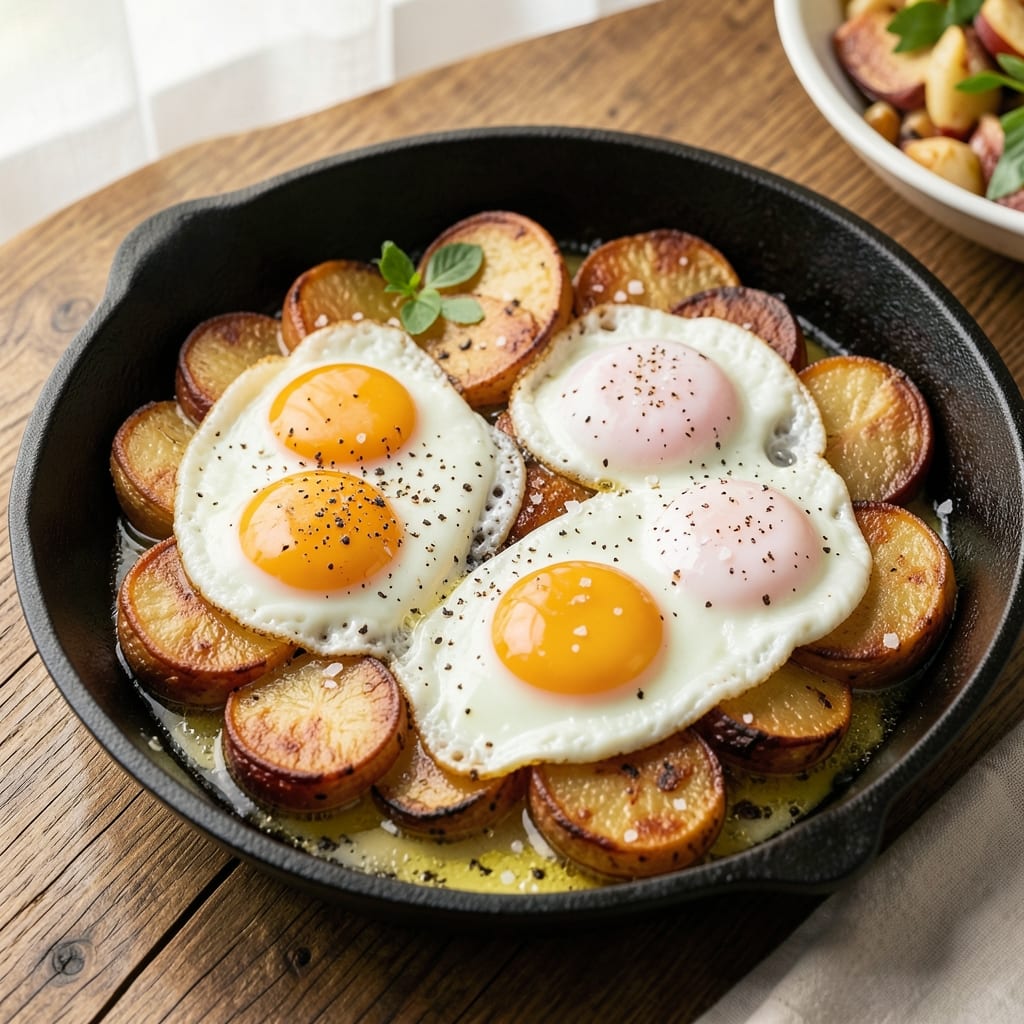
This egg and potato skillet recipe delivers the perfect balance of crispy hash browns and runny yolk magic—a breakfast that feels like a restaurant-quality indulgence without the fuss. The secret lies in layering thinly sliced potatoes for maximum crispiness while keeping the eggs perfectly tender at the center, creating that golden, caramelized edge that turns every bite into a satisfying crunch. I developed this recipe after years of experimenting with skillet breakfasts, and it’s now my go-to for lazy mornings or weekend brunch.
The process is straightforward but requires patience—thinly slicing the potatoes ensures they cook evenly and develop that crispy texture we all crave, while a gentle fry in oil (or butter for extra richness) locks in the flavor. The eggs, cracked into the skillet just before serving, cook in their own yolk magic, creating a silky, runny center that ties everything together. This isn’t just breakfast; it’s a foolproof method for transforming simple ingredients into a dish that feels special.
What makes this recipe stand out is its versatility—add crumbled bacon or sausage for extra protein, sprinkle cheese on top for a melty finish, or toss in fresh herbs like chives or parsley for brightness. The result is a skillet that’s restaurant-quality at home, with layers of texture and flavor that keep everyone coming back for seconds. Whether you're feeding a crowd or treating yourself to a solo meal, this dish delivers every time.
Ready in just 20 minutes, this skillet breakfast is perfect for weekdays or weekends, and it reheats beautifully for lunch the next day. The key is keeping the heat steady and letting the potatoes crisp up before adding the eggs—trust me, that’s where the magic happens. Let’s get cooking!
Ingredients for egg and potato skillet
Simple ingredients transform into a restaurant-style skillet breakfast with crispy potatoes and perfect eggs.
| Ingredient | Amount | Notes |
|---|---|---|
| Russet Potatoes 🥔 | 2 lb | Thinly sliced, uniform thickness |
| Large Eggs 🥚 | 4 whole | Fresh, room temperature |
| Unsalted Butter 🧈 | 4 tbsp | Cold, cut into small pieces |
| Vegetable Oil 🫒 | ¼ cup | For even cooking |
| Salt 🧂 | 1 ½ tsp | Kosher or sea salt |
| Black Pepper 🌶️ | ½ tsp | Freshly ground |
| Garlic Cloves 🧄 | 2 cloves | Minced, optional for flavor |
| Fresh Parsley 🌿 | ¼ cup | Chopped, for garnish |
| Crumbled Bacon 🥓 | 4 oz | Optional protein boost |
| Shredded Cheddar Cheese 🧀 | ½ cup | Optional melty finish |
| Chives 🌱 | 2 tbsp | Fresh, chopped for brightness |
The potatoes are the star—thinly sliced (about 1/8-inch thick) for even cooking and maximum crispiness. Russet potatoes work best because they hold up to slicing and frying without turning mushy. I always grab the organic bag from Whole Foods or Trader Joe's for the best texture, but any russet will do. If you're short on time, pre-sliced hash browns from the frozen section work in a pinch (just pat them dry first). The key here is uniform thickness—use a mandoline if you're feeling fancy, or a sharp knife and steady hand. Cold butter is non-negotiable for that rich, caramelized flavor—don't skip it.
No butter? Olive oil or avocado oil works just as well, though the flavor will be slightly different. Fresh parsley and chives can be swapped for dried herbs (use half the amount), but they lose that bright pop of freshness. The crumbled bacon adds protein and smokiness—if you're skipping it, a sprinkle of smoked paprika gives a similar depth. For the eggs, room temperature is crucial for that perfect runny yolk. Crack them gently into the skillet just before serving so they don't overcook. Pre-shredded cheese is convenient, but freshly grated melts better and tastes richer. If you're feeling experimental, try adding a pinch of cayenne or hot sauce for a spicy kick.
This skillet reheats beautifully—cover with foil and warm in a 300°F oven for 5-10 minutes. The potatoes stay crispy, and the eggs (if added later) can be reheated separately for that perfect runny texture. Store leftovers in the fridge for up to 3 days, though I rarely have any—this dish disappears fast. For meal prep, cook the potatoes ahead and store them in the fridge, then crisp them up again in the skillet before adding fresh eggs. Freeze extras by portioning into single servings with parchment between layers for easy reheating later.
Why You'll Love This Recipe
- One-Pan Magic: I swear by this recipe when I’m too tired to wash dishes. Just dice the potatoes, fry them in oil until golden, then crack eggs right into the skillet—no extra pans, no stress. The butter pools around the edges like a little reward at the end.
- Crispy-Creamy Gold: That first bite—crunchy potato edges with a runny yolk? It’s the kind of contrast that makes me pause mid-fork. The salt draws out the starch in the potatoes while keeping the eggs rich and simple, no fancy seasoning needed.
- Lazy Meal Prep: Between us, this is my go-to for busy mornings. Cook a big batch of potatoes, portion them out, and reheat with fresh eggs whenever. Honestly, it’s the only breakfast that doesn’t feel like a chore—even when I’m running late.
- Pantry Staple Power: Russets and eggs are cheap, and butter makes everything better. If you’ve got those basics, you’ve got a filling, satisfying meal. Leftovers? Just as good cold in a lunchbox or reheated for dinner—no takeout needed.
Step-by-step instructions for crispy potato and egg skillet
Here's how to create golden hash browns with perfectly runny yolks—every bite delivers that satisfying crunch and velvety center.
Prep and Cook the Potatoes
Cut the 2 lb Russet Potatoes into ¼-inch thick slices using a mandoline or sharp knife for uniform thickness. Pat each slice dry with paper towels—this ensures maximum crispiness. Spread them on a baking sheet and toss with ½ teaspoon of the 1.5 tsp Salt and ¼ teaspoon of the 0.5 tsp Black Pepper. Let them sit for 10 minutes while you prepare the pan.
Heat a 12-inch cast-iron skillet over medium-high heat for 3 minutes. Add ¼ cup Vegetable Oil and 2 tbsp Unsalted Butter (the cold pieces will melt into the oil). Arrange the potato slices in a single layer, leaving ¼-inch gaps between them. Cook undisturbed for 4-5 minutes until the edges turn golden brown and crispy. Flip each slice carefully with a spatula and cook another 4-5 minutes until both sides are deep golden and tender when pierced with a fork.
Build Flavor with Bacon and Aromatics
Remove the potatoes from the skillet and set aside. Add the 4 oz Crumbled Bacon to the same skillet and cook over medium heat for 3-4 minutes until crispy. Use a slotted spoon to remove the bacon, leaving the rendered fat in the pan. Add the 2 cloves minced Garlic Cloves and cook for 30 seconds until fragrant—don't let it brown or it'll turn bitter.
Return the potatoes to the skillet and stir gently to coat them in the bacon fat and garlic. Sprinkle the remaining 1 teaspoon Salt and ¼ teaspoon Black Pepper over the potatoes. Let them warm through for 1-2 minutes while you prepare the eggs. The skillet should still be warm but not smoking—this prevents the eggs from scrambling when added later.
Create Perfectly Runny Yolks
Crack the 4 whole Large Eggs into a small bowl and season lightly with ¼ teaspoon Salt and ⅛ teaspoon Black Pepper. The eggs should be at room temperature for even cooking. Make 4 small wells in the potato mixture using the back of a spoon, being careful not to disturb the crispy edges. Gently slide an egg into each well—don't break the yolks yet.
Cover the skillet with a lid and cook over low heat for 3-4 minutes. This gentle heat allows the whites to set while keeping the yolks completely liquid. If the skillet starts to smoke or the eggs cook too quickly, reduce the heat to medium-low. The edges of the whites should be just set, but the yolks should remain glossy and unbroken—this is the magic moment.
Finish with Cheese and Fresh Herbs
Remove the skillet from heat and sprinkle the 0.5 cup Shredded Cheddar Cheese evenly over the eggs and potatoes. The residual heat will melt the cheese into a creamy, stretchy finish without overcooking the yolks. Let it sit for 30 seconds to melt completely, then garnish with 2 tbsp chopped Chives and ¼ cup Fresh Parsley. The bright green herbs cut through the richness of the eggs and bacon.
Serve immediately while the potatoes are still crispy and the yolks remain liquid at the center. The contrast of crunchy hash browns, creamy eggs, and crispy bacon makes every bite satisfying. For extra flavor, drizzle with a little more bacon fat from the skillet—it's packed with smoky goodness.
Pro Tips For Making Egg And Potato Skillet
- CUT POTATOES EVENLY: Grab a ruler—yes, really—and slice those Russets into ¼-inch rounds. I learned this the hard way: uneven pieces mean some potatoes turn to mush while others stay raw. A mandoline makes this faster, but a sharp knife works too if you’re patient (and don’t mind a few extra cuts).
- SALT THE POTATOES FIRST: Toss the sliced potatoes with salt before they hit the pan—about ½ teaspoon per pound. My grandmother swore by this, and she was right: it draws out moisture so they crisp instead of steam. Don’t skip it, even if it feels early.
- LOW AND SLOW FOR EGGS: Once the potatoes are golden, lower the heat to medium-low before cracking in the eggs. I used to blast them on high, and they’d cook unevenly or even splatter. A gentle simmer lets the eggs set slowly while keeping the potatoes crisp—no rubbery yolks here.
- USE HALF BUTTER, HALF OIL: Start with 1 tablespoon oil (high smoke point for browning) and finish with 1 tablespoon butter (flavor). Sounds weird, but it works: the oil gets the potatoes crisp, and the butter adds richness without burning. Skip the oil, and you’ll regret it—trust me.
Pro cooking tips for great egg and potato skillet
Mastering Skillet Heat
Your skillet's temperature is the single most critical factor for perfect results. Start with medium-high heat for the potatoes—this creates that coveted crispy crust without burning. I use a 12-inch cast-iron skillet because it retains heat beautifully, but a nonstick skillet works too if you avoid overcrowding. The key is patience: let the potatoes cook undisturbed for 4-5 minutes per side—this builds those golden, caramelized edges. If your skillet isn't hot enough, the potatoes will steam instead of crisp. 🔥
When adding the eggs, drop the heat to low (or even medium-low) to prevent scrambling. The residual heat from the potatoes will gently cook the whites while keeping the yolks liquid. I like to use a lid for the final 3-4 minutes—this traps steam and creates a tender white while preserving that glorious runny yolk. If your skillet starts smoking, immediately reduce the heat or remove it from the burner for a minute to let it cool slightly.
Potato Slice Perfection
Uniform thickness is non-negotiable for even cooking. I use a mandoline slicer set to ¼-inch for consistent results, but a sharp knife works too—just stay steady and keep your slices parallel. After slicing, pat them completely dry with paper towels. Any moisture left on the potatoes will prevent crispiness and cause them to steam instead of brown. I like to toss them with a pinch of salt and pepper right after slicing, then let them sit for 10 minutes while I heat the skillet—this jumpstarts the seasoning and draws out excess moisture.
Arrange the slices in a single layer with ¼-inch gaps between them. Overcrowding steams the potatoes instead of crisping them. If you're short on time, you can par-cook them in the microwave for 2-3 minutes before frying to speed up the process without sacrificing texture. Just make sure they're still dry before adding them to the skillet.
Egg Timing Secrets
The moment you add eggs to the skillet is where the magic happens. Crack them into a small bowl first and season lightly—this prevents over-salting and makes it easier to slide them into place. Make 4 small wells in the potato mixture using the back of a spoon, being careful not to break the crispy edges. Gently slide an egg into each well—don't pour them directly onto the potatoes, or you'll lose that perfect well shape. 🥚
Covering the skillet with a lid is my secret weapon for runny yolks. The trapped steam creates a gentle cooking environment that sets the whites just enough while keeping the yolks completely liquid. If you don't have a lid, a piece of aluminum foil works in a pinch. The eggs are done when the whites are just set but still slightly translucent at the edges—the yolks should remain glossy and unbroken. Overcooking by even 30 seconds can turn that perfect yolk into a sad, rubbery mess.
Fat Management
Don't skimp on the fat—this is what creates that rich, caramelized flavor. I use a 50/50 mix of vegetable oil and cold unsalted butter for the best results. The oil provides a high smoke point for even cooking, while the butter adds richness and depth of flavor. If you're using all butter, add it gradually to prevent burning. For extra flavor, save the rendered bacon fat from cooking the bacon and drizzle it over the finished skillet—it's packed with smoky goodness that elevates every bite.
After cooking the potatoes, remove them from the skillet and set aside. Use that same skillet to crisp the bacon, then add the minced garlic for just 30 seconds—this infuses the potatoes with flavor without burning the garlic. Return the potatoes to the skillet and let them warm through in the bacon fat. This step is what transforms a simple potato and egg dish into something restaurant-worthy.
Nutrition facts
Frequently asked questions
Can I use sweet potatoes instead of russets?
Yes, but the texture will differ slightly. Sweet potatoes hold more moisture, so pat them extra dry and cook them 1-2 minutes longer per side for crispiness. They'll be sweeter and softer than russets, but still delicious. For best results, peel them first and slice ⅛-inch thick—the thinner slices crisp better.
How do I make this dish vegetarian?
Skip the bacon and swap it for crumbled tempeh or smoked tofu for protein. Add ½ cup sautéed mushrooms or caramelized onions for extra flavor. Use olive oil instead of butter if avoiding dairy, and top with nutritional yeast for a cheesy taste without cheese. The eggs will still be the star!
Why did my potatoes turn out soggy instead of crispy?
Soggy potatoes usually mean moisture wasn't properly removed or the heat wasn't high enough. Always pat slices completely dry with paper towels and cook in a single layer with ¼-inch gaps. Use medium-high heat and avoid overcrowding the skillet. If needed, par-cook slices in the microwave for 2 minutes first to remove excess moisture before frying.
Can I make this ahead of time?
Cook the potatoes up to 2 days ahead and store in the fridge. Reheat in a 350°F oven for 10-15 minutes until crispy again. For the eggs, cook them fresh in the skillet just before serving—this ensures that perfect runny yolk. If reheating leftovers, add fresh eggs to the warm skillet for 3-4 minutes with a lid.
What's the best skillet for this recipe?
A 12-inch cast-iron skillet is ideal because it retains heat evenly and creates that perfect crispy crust. If you don't have cast iron, a heavy stainless steel or nonstick skillet works too—just avoid nonstick if you want maximum crispiness. Season your cast-iron skillet well before using for the best results. For even cooking, make sure your skillet is large enough to fit the potato slices in a single layer without overcrowding.