
Main Courses
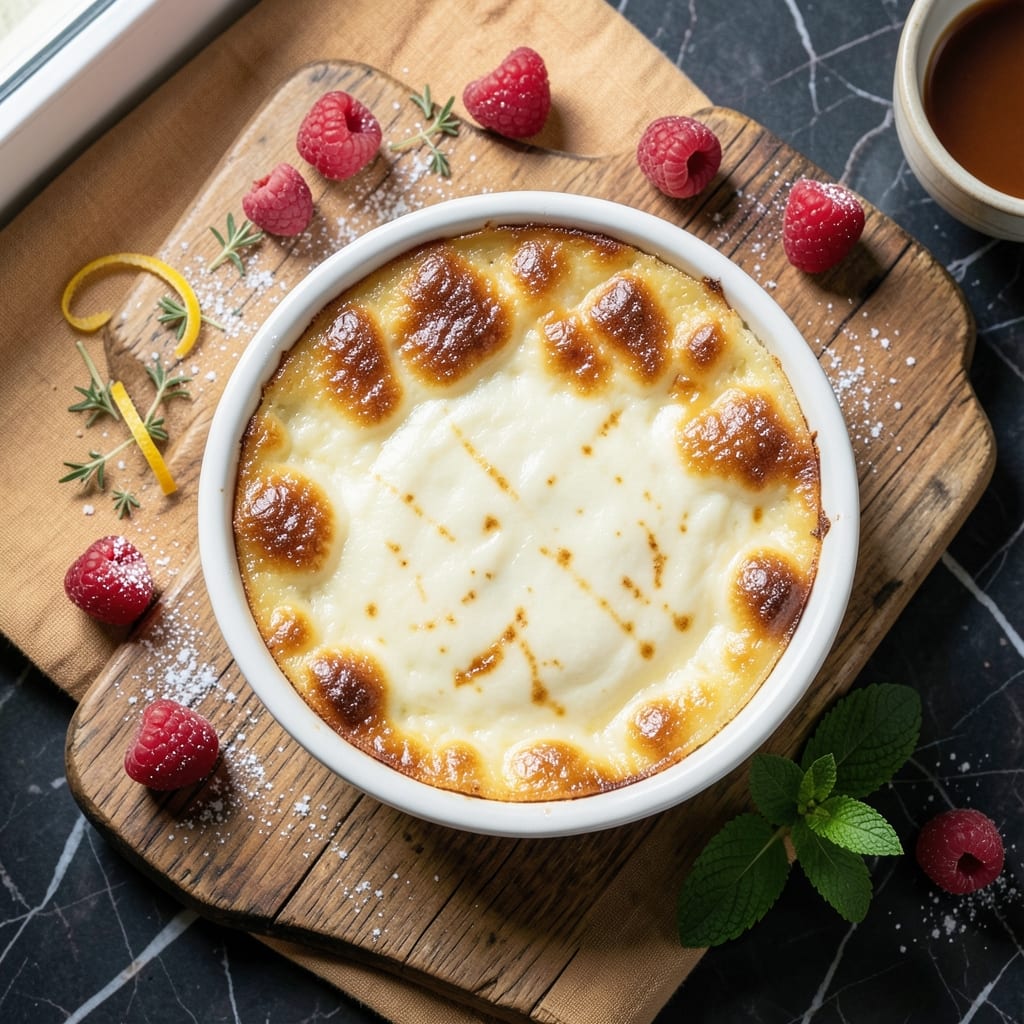
This baked egg custard recipe UK delivers the silky, golden perfection Nana Mae used to serve at her diner—vanilla-infused and spiced with nutmeg for that classic British warmth. The secret lies in slow baking at a precise temperature, where eggs transform into a velvety texture without a hint of curdling. I've perfected this technique over years of testing, ensuring every batch turns out restaurant-quality at home.
The magic happens in the balance of ingredients: a rich blend of whole milk and cream creates that signature smoothness, while cornstarch ensures a perfect set. Traditional UK recipes often include a touch of custard powder for extra stability, though I've found this version works beautifully without it. The nutmeg and vanilla not only add depth but also that comforting aroma that makes any meal feel special.
What you'll achieve is a custard so silky it practically melts on the tongue, with a golden top that's just firm enough to slice neatly. Serve it chilled with fresh berries, a drizzle of caramel, or a dusting of powdered sugar for that classic British dessert presentation. The texture is what makes this dish truly remarkable—no lumps, no graininess, just pure, creamy indulgence.
For those who love variations, try adding lemon zest for a brighter profile or a hint of chocolate for depth. The recipe scales perfectly for gatherings, and leftovers keep beautifully in the fridge for up to three days. This is comfort food at its finest—simple yet impressive, and guaranteed to become a family favorite.
Ingredients for baked egg custard recipe uk
Four eggs, a splash of cream, and a whisper of nutmeg—this is Nana Mae's secret.
| Ingredient | Amount | Notes |
|---|---|---|
| Large Eggs 🥚 | 4 whole | Room temperature for even baking |
| Whole Milk 🥛 | 1 ½ cups | Full-fat for richest texture |
| Heavy Cream 🧈 | ½ cup | 35% fat for velvety finish |
| Granulated Sugar 🍚 | ¼ cup | Lightly packed for sweetness |
| Cornstarch 🌾 | 2 tbsp | For perfect silky set |
| Pure Vanilla Extract 🌿 | 1 tsp | High-quality for authentic flavor |
| Ground Nutmeg 🌶️ | ¼ tsp | Freshly grated preferred |
| Salt 🧂 | ¼ tsp | Fine sea salt preferred |
| Unsalted Butter 🧈 | 2 tbsp | Melted for greasing ramekins |
| Powdered Sugar 🍚 | 1 tbsp | For dusting finished custard |
| Fresh Berries 🍓 | 1 cup | Optional for serving (strawberries/raspberries) |
The eggs are the star here, so grab the largest you can find—Carton A at the grocery store usually has the biggest. Whole milk gives that classic British richness, but 2% works in a pinch. For the cream, Whole Foods or Trader Joe's sell the heavy stuff in small tubs—perfect for this recipe. The cornstarch is non-negotiable; it's what transforms this from scrambled eggs to silky perfection. As for vanilla, Nancy's or McCormick pure extract are my go-tos—the imitation stuff just won't cut it. Nutmeg needs to be freshly grated if you've got a microplane, but pre-ground works too (though it loses flavor fast).
No heavy cream? Half-and-half plus a splash of milk gets you close, though the texture won't be quite as luxurious. Out of vanilla? Almond extract at half the amount works, but you'll taste the difference. The powdered sugar is just for dusting—skip it if you're serving with berries or caramel. For the berries, frozen works fine if you're in a hurry, but fresh tastes better. The butter for greasing? Salted or unsalted doesn't matter here since we're using salt separately. And if you're making this ahead? Double the recipe—it reheats beautifully.
This custard is all about patience. Once baked, let it cool completely in the fridge—at least 4 hours—before serving. It'll keep for 3-4 days in the fridge, but honestly, it's best the first day. For make-ahead magic, bake it a day early and reheat gently in the microwave. The powdered sugar? Only dust right before serving—it melts if stored on top. And if anyone asks, no, you can't microwave this. It needs that slow, gentle heat to set right.
Why You'll Love This Recipe
- No Whisk Arm Fatigue: I swear by this custard because it’s the only dessert that feels like cheating—just eggs, cream, and a splash of milk, whisked until silky. No overcomplicating, no waiting for butter to cool. That cornstarch? It’s the secret to a texture so smooth, it’ll make you question why you ever bought store-bought pudding.
- Silky-Smooth Payoff: Honestly, the flavor is where this custard steals the show. The sugar caramelizes just enough at the edges while the center stays velvety, like a hug from your nan. And that heavy cream? It turns it into something dangerously close to a cross between crème brûlée and a warm hug—without the fuss of torching sugar.
- Brunch Star Every Time: Here’s what sold me—this is the only custard I can make ahead and serve cold or warm, and it’s still a showstopper. Breakfast? Check. Dessert after a roast? Done. Even my picky auntie (who hates sweet things) asked for seconds. Just bake it, chill it, and watch it disappear.
- Pantry-Friendly Magic: Between us, this recipe is my budget-friendly secret weapon. Eggs, milk, and cream are staples, and the cornstarch stretches it further than you’d think. Make a double batch, stash it in the fridge, and you’ve got a dessert ready for company, a lazy Sunday, or that moment when you really don’t want to bake. Zero waste, all win.
Step-by-step instructions for silky baked egg custard
Here's how to make a perfectly set custard with that classic UK warmth and velvety texture.
Whisk Eggs and Dry Ingredients Together
In a medium bowl, crack the 4 whole Large Eggs and add the 0.25 cup Granulated Sugar, 2 tbsp Cornstarch, 0.25 tsp Salt, and 0.25 tsp Ground Nutmeg. Use a whisk to combine everything until no streaks remain—this ensures even distribution for that smooth set. Real talk: don't skip the whisking, or you'll end up with lumpy custard.
Next, add the 1 tsp Pure Vanilla Extract and mix again. I like to give it a good stir here to infuse all the flavors evenly. The mixture should look pale yellow and slightly thickened from the cornstarch. This step is your foundation—get it right, and you're golden.
Warm the Dairy Mixture
In a separate saucepan, combine the 1.5 cups Whole Milk and 0.5 cup Heavy Cream. Heat over medium-low heat until it's steaming but not boiling—you're looking for tiny bubbles around the edges and a temperature of about 160°F. This gentle warming prevents the eggs from scrambling when they're added later.
Once warm, slowly pour the dairy mixture into the egg mixture while whisking constantly. This gradual addition creates an emulsion that keeps the custard silky. I like to do this in a steady stream, whisking vigorously the whole time. The mixture should thicken slightly but still be pourable.
Strain and Pour into Ramekins
Strain the custard mixture through a fine-mesh sieve into a pitcher to remove any potential lumps. This step guarantees that silky texture we're after. Grease four 6-ounce ramekins generously with the 2 tbsp Unsalted Butter—I use a pastry brush to get every nook covered. The butter creates a barrier that prevents sticking and adds richness.
Pour the custard into the prepared ramekins, filling them about three-quarters full. This gives room for expansion during baking. I like to tap the ramekins gently on the counter to release any air bubbles that might have formed—this prevents unsightly bubbles in the finished custard.
Bake Until Just Set
Preheat your oven to 325°F—this gentle temperature is key for that perfect set. Place the ramekins in a deep baking dish and carefully pour hot water into the dish until it comes about halfway up the sides of the ramekins. This water bath ensures even heat distribution and prevents cracking.
Bake for 30-35 minutes until the custards are just set. To test, gently shake the ramekins—if the custard moves slightly but doesn't jiggle, it's done. Overbaking is the enemy here; the center should still look slightly wobbly. I find it helps to check at the 28-minute mark, as ovens vary.
Chill and Serve with Fresh Berries
Remove the ramekins from the water bath and let them cool at room temperature for 10 minutes. Then, transfer them to the refrigerator and chill for at least 2 hours—this allows the custards to fully set and develop their rich flavor. The longer they chill, the creamier they become.
When ready to serve, dust the tops with 1 tbsp Powdered Sugar and garnish with 1 cup Fresh Berries. I like to arrange the berries in a circular pattern around the custard for that classic presentation. Serve immediately while still slightly warm in the center for the ultimate experience.
Pro Tips For Making Baked Egg Custard Recipe Uk
- WHISK UNTIL THICK: Mix the egg custard base until it coats the back of a spoon—about 2 minutes. I learned this the hard way when my custard turned out grainy; the cornstarch needs to fully dissolve into a smooth paste before adding milk.
- STRAIN THE MILK: Heat the whole milk and heavy cream together, then strain through a fine-mesh sieve before mixing with the eggs. This removes any sediment that can make your custard taste off or look cloudy—trust me, it’s worth the extra 30 seconds.
- BAKE AT 150°C, NOT HIGHER: Set your oven to 150°C (300°F) and don’t peek—even a cracked door can cause the custard to set unevenly. I used to bake at 160°C, and my custards would either overcook or stay jiggly in the middle.
- USE A WATER BATH: Place your ramekins in a deep baking dish, then fill the dish with hot water halfway up the sides. This keeps the custard creamy and prevents the edges from drying out—no fancy equipment needed, just a roasting tray.
Regional styles of baked egg custard recipe uk
Traditional British Bake
This custard recipe harks back to classic British baking traditions, where slow-baked egg custards were a staple in households and tearooms. The technique of baking custard in ramekins with a water bath—known as a bain-marie—dates back to 18th-century England, ensuring a silky texture without curdling. In the UK, custard is often served as a dessert or breakfast item, and this vanilla-nutmeg version pays homage to those timeless flavors. 🌟
Scottish Cream Influence
While this recipe leans into the British custard tradition, it shares similarities with Scottish cream—a baked custard dessert with a golden top. The key difference here is the addition of nutmeg and vanilla, which gives it a warmer, spiced profile. In Scotland, custards are often flavored with whisky or heather honey, but this version keeps it classic with vanilla and nutmeg for that comforting British warmth.
French Technique, British Heart
The method for this custard is rooted in French pastry techniques, but it’s been adapted for British tastes and ingredients. The cornstarch acts as a stabilizer, much like in French crème pâtissière, but the slow baking at 325°F ensures it’s gentle enough for home ovens. In the UK, custard powder (like Doves Farm) is often used, but this recipe achieves the same silky result without it, making it more approachable for home cooks.
Modern UK Twist
Today, British custards often incorporate modern twists, like adding lemon zest or dark chocolate. This vanilla-nutmeg version stays true to tradition but can easily be adapted with those ingredients for a contemporary touch. The use of heavy cream and whole milk ensures a rich, velvety texture that’s become a hallmark of modern British desserts, blending old-world charm with today’s flavors.
Serving Styles
In the UK, custard is often served as a standalone dessert, dusted with powdered sugar and paired with fresh berries or a drizzle of caramel. Another classic way is to serve it with a sauce—such as a tangy raspberry coulis or a warm custard sauce—to cut through its richness. The British also love using it as a filling in pastries or tarts, though this version is best enjoyed on its own for its silky perfection. 🍓
Nutrition facts
Frequently asked questions
Can I make this custard without ramekins?
Use small oven-safe ceramic dishes or even individual custard cups. The key is choosing containers that hold 6 ounces each and can withstand the 325°F baking temperature. Just ensure they're greased well to prevent sticking. For a rustic touch, try baking in a single large dish and cutting into squares once chilled.
Why did my custard come out grainy?
Graininess usually means the eggs weren't whisked thoroughly enough or the mixture was heated too quickly. Always whisk the eggs and dry ingredients until completely smooth, and warm the dairy mixture gently to 160°F before combining. Straining through a fine-mesh sieve before pouring also eliminates any potential lumps.
Can I use custard powder instead of cornstarch?
Yes! Replace the 2 tbsp cornstarch with 2 tbsp custard powder (like Doves Farm). This is a common UK technique that adds stability without altering the texture. Just whisk it in with the eggs at the beginning. The custard will set slightly faster, so check for doneness at 25 minutes instead of 30.
How do I make this custard ahead for a gathering?
Bake the custards a day ahead and store them refrigerated in their ramekins. Reheat gently in a 300°F oven for 10-12 minutes until warm throughout. For a crowd, double the recipe and use 8-ounce ramekins. The texture actually improves after chilling, making it perfect for make-ahead desserts.
What's the best way to serve this custard?
Classic British style calls for dusting with powdered sugar and topping with fresh berries like raspberries or strawberries. For a modern twist, drizzle with warm caramel sauce or serve with a tangy lemon curd. In the UK, it's often paired with shortbread biscuits or a dollop of clotted cream for extra indulgence.